
How to train for a long distance hike comes down to steady aerobic walking, loaded-pack hikes in the shoes you will wear, and leg strength work, started a month or two ahead at minimum.
Training is one part of how to plan an adventure trip, so fix your route, dates and daily distances first, then work backwards from them.
Picture someone with a long trail booked who mostly walks on pavements and plans to “get fit in the last fortnight”. The plan below fixes that: several months of modest, repeated work beats a late scramble, and the evidence points to a few specific habits rather than a long list.
Common misunderstandings about hike training
Most training mistakes come from treating a long hike as either a pure fitness test or something you can improvise on the trail. The Pacific Crest Trail Association estimates, as Bearfoot Theory reports, that 50-60% of people who attempt to thru-hike the PCT fail, which is reason enough to treat preparation as part of the trip.
| Common belief | What the evidence supports | Planning use |
|---|---|---|
| Walking and gym work are enough | In the plan cited by Adventure Alan, adding a day of exercising with a backpack doubled the effect of resistance and aerobic conditioning alone. | Make your weekend long hike a loaded one rather than relying on unloaded walks. |
| Long hikes should feel hard | The long training hike is done at conversational pace, and aerobic sessions sit at 60-70% of max heart rate. | Slow down on long days and scale up by distance or duration, not speed. |
| Strength work needs long gym sessions | Just 15 minutes a day can help build strength and prevent injuries. | Short, frequent sessions suit people with busy schedules. |
| Start with your full trip load | Beginners can start with 5-10 lb in the pack for day hikes. | Add weight gradually as the distance grows. |
| A week or two of prep is plenty | One published plan for busy people runs 12 weeks. | Count backwards from your start date and begin early. |
Figures are from Adventure Alan’s hiking training plan and Bearfoot Theory’s thru-hike training guide.
How long to train and how often
Plan on a few months where you can: the Adventure Alan plan runs 12 weeks and is designed for busy lives. One hiker on a Backpacking Light forum thread says conditioning for the hiking season now takes a month or two rather than the week or two it used to. That is one person’s experience, so it suits someone who already walks regularly and wants a floor, not a promise.
The weekly rhythm in the Adventure Alan plan is modest: one long day hike per weekend plus three one-hour sessions midweek. Other hikers suggest similar frequencies:
- Cardio 3-4 times per week. Bearfoot Theory recommends this before a thru-hike to build the cardiovascular system.
- About four sessions per week, alternating strength and cardio. This is the suggestion in a hiker-written guide on The Trek, and alternating keeps the same muscles from being hit on consecutive days.
Pick whichever pattern you can sustain without skipping the weekend hike, since that session carries the most trail-specific value.
Weekly mileage and the aerobic base
Your weekly mileage should rise toward the daily distance your trip demands, not toward a generic weekly total. The Trek’s advice for weighted hikes is to build to the average distance you want to cover each day on your thru-hike.
Mileage benchmarks by endurance level
Adventure Alan defines what counts as a challenging hike for each level, which gives you a sensible target for your longest training day.
| Level | Challenging hike per day | Planning use |
|---|---|---|
| Beginner | 3-6 miles and under 2k ft elevation gain | Build the long weekend hike inside this range first. |
| Intermediate | 6-10 miles and/or 2-4k ft | Add climbing before adding more distance if your route is hilly. |
| Advanced | 10-20 miles and/or 3-5k ft | Suits hikers preparing for multi-day trail itineraries. |
| Elite | 20+ miles and/or 5k+ ft | Only relevant if your route daily distances are this high. |
Benchmarks are from Adventure Alan.
Climbing counts as distance. A rule of thumb shared on Backpacking Light treats each 1000 vertical ft as the equivalent of 2 miles, which helps when comparing a flat training route with a mountain itinerary. The same thread has one experienced hiker training roughly 30-35 miles per week; read that as one seasoned hiker’s volume, not a target for a first long trip.
Aerobic sessions and effort
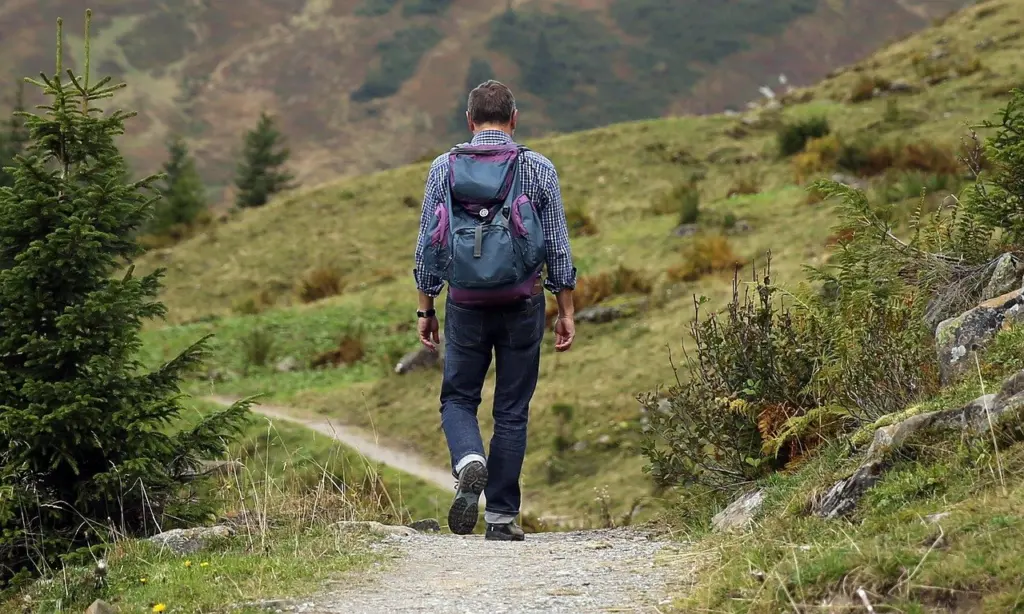
An aerobic endurance session is 30-60 minutes at 60-70% of max heart rate, running or hiking with a pack on. For long training hikes, keep a conversational pace. If you can chat comfortably, you are in the right zone to scale up distance or duration safely.
If you use a gym, an incline treadmill works as a hill substitute. The Trek suggests building up to the point where a 5k no longer feels challenging.
Strength exercises for hikers
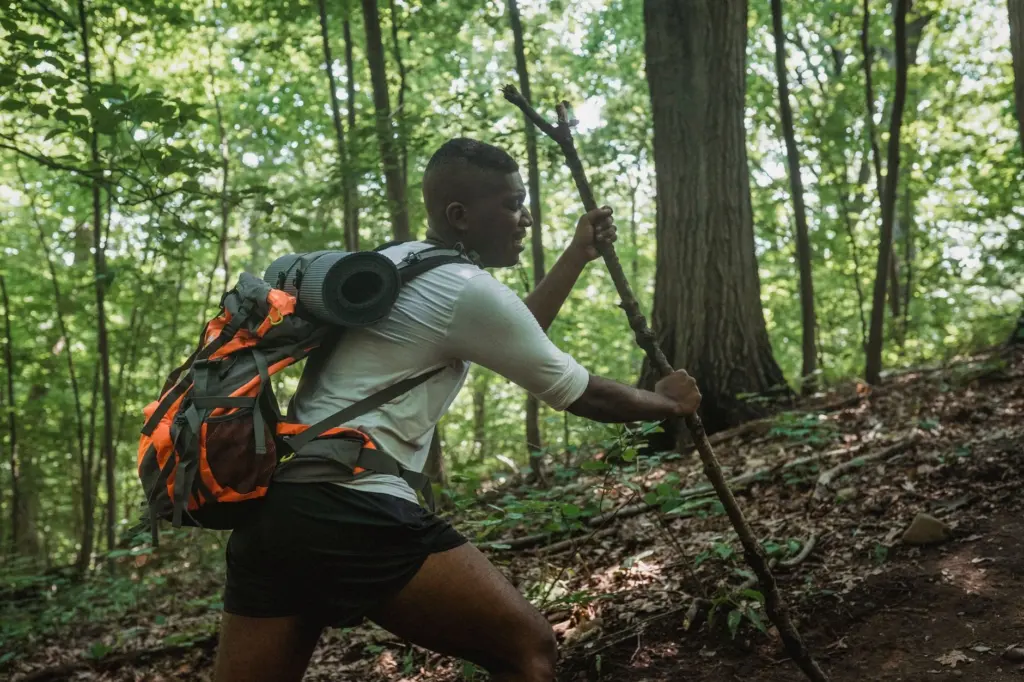
Strength work for hiking centres on single-leg and hip movements that match climbing and descending. Two published sources give similar doses:
- Weighted step-ups. Adventure Alan prescribes 2-3 sets of 15-20 reps at 60% 1RM; The Trek suggests 15 reps x 3 sets.
- Weighted single-leg calf raises. Adventure Alan gives the same 2-3 sets of 15-20 reps at 60% 1RM; The Trek lists calf raises at 15 x 3.
- Bulgarian split squats and single-leg glute bridges. The Trek recommends 10 reps x 3 sets of each.
- Romanian deadlifts. The Trek recommends 8 reps x 3 sets.
Where the two sources overlap, the dose is a range; start at the lower end and move up as the movement feels controlled. Bearfoot Theory notes that a short daily routine of 15 minutes can build strength and prevent injuries, which is easier to keep up than occasional long gym sessions. One hiker on Backpacking Light reports strength training two days a week alongside weekly mileage, a pattern that fits within the rhythm of about four times per week above. Doses are from Adventure Alan and The Trek.
Training with a pack
Training with a pack means adding load gradually and doing it in the gear you will carry. Bearfoot Theory suggests starting small with wrist or ankle weights on training walks, or filling your pack with 5-10 lb for day hikes. Adventure Alan advises wearing the shoes and backpack you will use on the hike you are training for, so fit problems show up at home rather than on trail.
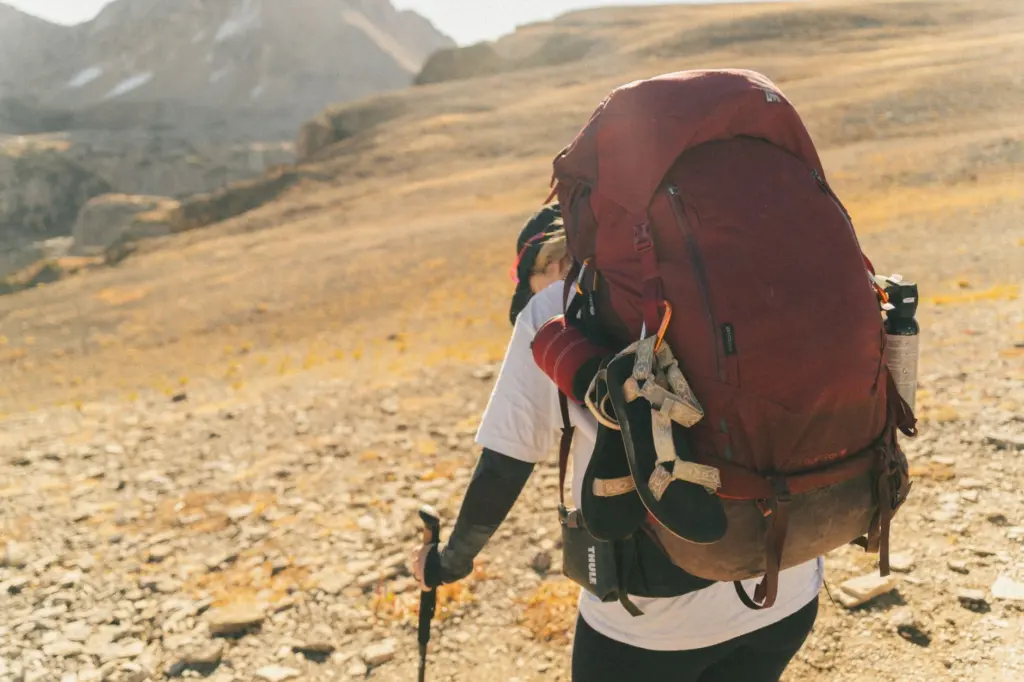
Build the weight in step with the distance, using the weighted-hike advice from The Trek: work up to the average daily distance of your planned trip. If your trip involves staying in refugios rather than carrying full camping gear, W Trek Refugios: The Complete 2026 Guide To Choosing, Booking, And Staying On Patagonia’s Classic Route helps you judge what your pack weight is likely to be before you set a final training target.
The shoes and pack you train in are also part of the trip’s costs, so settle how to budget for an adventure trip before buying new gear partway through training.
Recovery between sessions
Recovery is built into the schedule by alternating strength and cardio sessions rather than stacking them. Bearfoot Theory also recommends yoga, noting it teaches stretches you can do after workouts and on trail, which suits the days after your long weekend hike.
Frequently asked questions
| Question | Answer |
|---|---|
| Do I need interval training? | Only if you are advanced or elite. Adventure Alan prescribes 2-4 minute intervals, 4-8 reps, with 2-4 minute rests at 85-95%+ max heart rate for them, while beginner and intermediate hikers repeat the aerobic endurance day instead. |
| How can I check my pack training is working? | Load your backpack to 30 lb and time yourself walking 2 miles on a familiar route, as Adventure Alan suggests, then repeat the test later to see whether the time drops. |
| What pace should I plan for on the trail? | One Backpacking Light forum contributor notes that at 2.5 mph you can do 20 miles in 8 hours, which is useful for estimating how long a planned day will take. |
| Should I see a professional before starting? | Yes if you have preexisting conditions or injuries. Hikers writing for The Trek advise consulting a professional before starting any new exercise routine. |