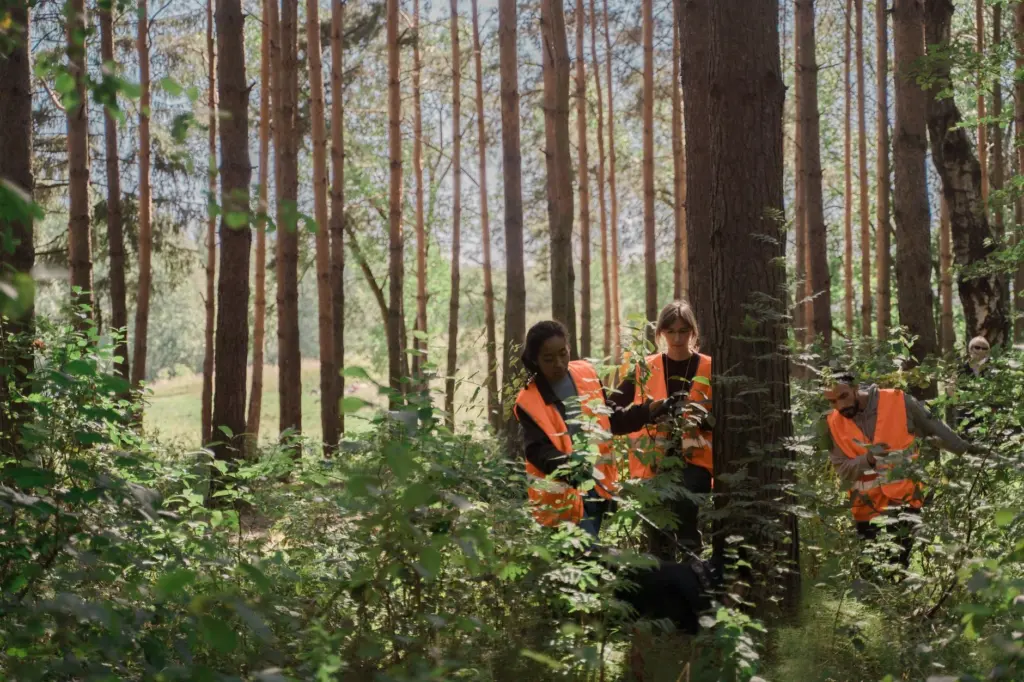
You find a cheap wildlife placement with great photos and no detail. Before paying, check what you will actually do each day: a credible volunteer abroad wildlife program explains tasks, supervision, costs, health requirements and insurance in writing.
Treat the placement as one leg of a bigger journey. The same habits that make a trip work, from lead time to backup plans, are covered in our guide on how to plan an adventure trip. Below, each section corrects a common misunderstanding and turns it into a decision.
What wildlife volunteering involves
Wildlife volunteering is practical support for a conservation or animal-care project, and it is often less glamorous than the marketing suggests. Volunteer-travel writers describe it as a way to merge wanderlust with wildlife conservation, which is accurate as a motivation. The daily reality is closer to a job: routines, chores and a team that depends on you turning up.
Three assumptions cause most disappointment. The table sets each against what the operators themselves say.
| Common assumption | What the evidence supports | Planning use |
|---|---|---|
| It is mostly close contact with animals | A host platform warns that there is a lot of dirty work that needs doing, and one Florida wildlife rescue project has volunteers working up to 8 hours a day. | Ask for a sample daily schedule and expect cleaning, preparation and routine tasks to fill much of it. |
| Anyone can join | The same Florida project requires volunteers to be 21 years or older with sufficient English skills. | Check age, language and health conditions before you pay a deposit or book flights. |
| Staff supervision removes the risk | The host platform states that working with animals can be dangerous. | Ask about safety briefings, protective clothing and what happens if someone is injured. |
These figures come from the Natucate Florida wildlife rescue listing and the HelpStay animal conservation guidance.
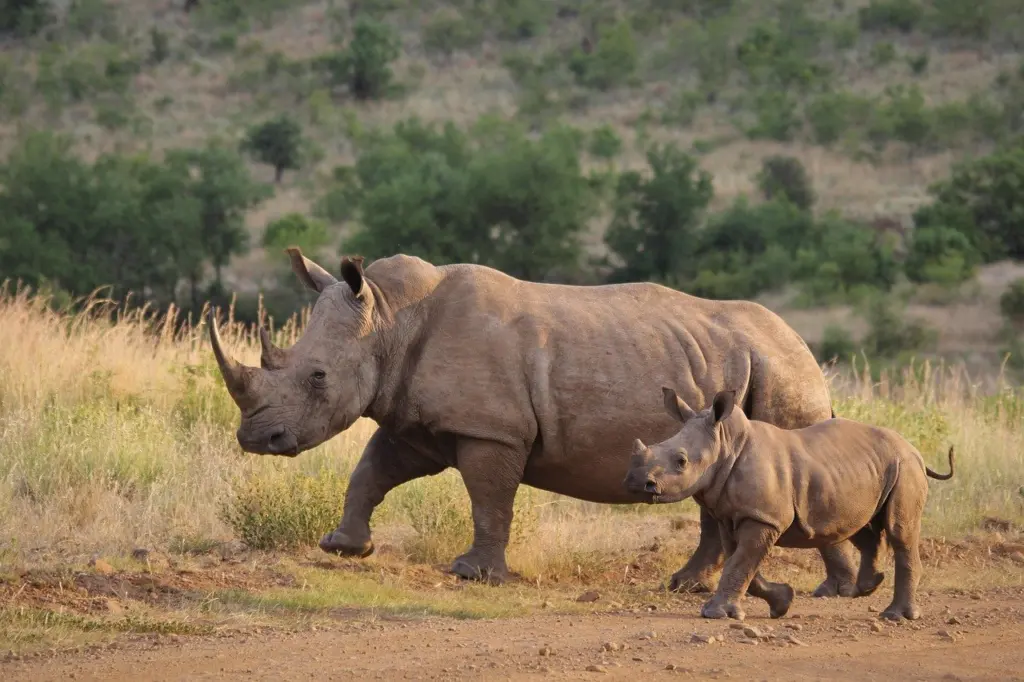
The practical conclusion is to choose a placement for the work, not the photographs. If you want a role centred on contact with animals, a project that spends its days on cleaning, feeding preparation and monitoring will feel like a mismatch. If you are happy being useful in unglamorous ways, almost any well-run project can suit you.
Choosing a credible program
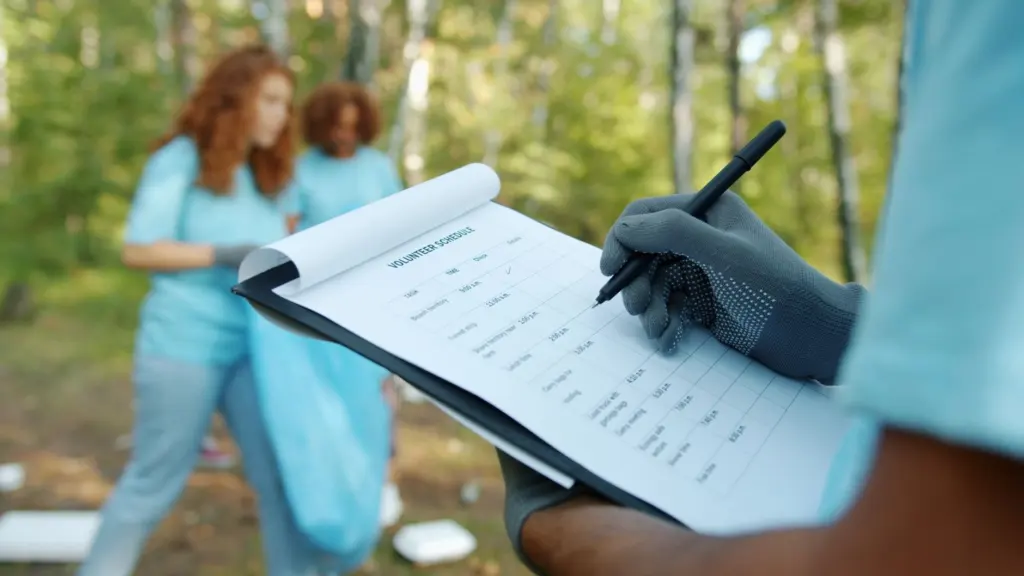
A credible program lets you test its claims before you commit. HelpStay advises volunteers to reach out to many hosts and not be too hasty, and that is the best single rule. Compare several projects on the same questions, and give weight to the ones that answer directly and in writing.
Track record matters, but read it carefully. Pod Volunteer, for example, says it has been supporting volunteers since 2001. That is the operator’s own description, so use it as a prompt to ask for references from recent participants rather than as proof of quality.
- Tasks and goals: ask what you will do each day and how that work feeds a conservation aim. A program that cannot describe daily duties or learning outcomes is a poor bet.
- Supervision: ask who leads the team on site and what training or field experience they have.
- Where the fee goes: ask how money is split between animal care, staff, community work and accommodation.
- Permits and partners: look for documented relationships with local authorities, universities or established conservation groups.
- Animal welfare: be wary of anything that offers posing with animals or photo opportunities as a feature. Ask about handling, rehabilitation and release policies.
- Refunds and emergencies: ask for cancellation, refund and evacuation policies before you pay.
Costs and what fees cover
Costs vary widely, and the price alone says little about quality. Pod Volunteer lists starting prices for three wildlife projects, shown below.
| Program | Length | Cost from | Planning use |
|---|---|---|---|
| Elephant Care, Thailand | 1 to 12 weeks | £695 / €805 / $905 | The lowest starting price of the three, a sensible baseline for a first placement. |
| Turtle Conservation, Costa Rica | 1 to 12 weeks | £995 / €1155 / $1295 | Compare against the elephant project to see how destination and species affect price. |
| Desert Elephant Conservation, Namibia | 2 to 12 weeks | £1295 / €1500 / $1685 | The highest starting price and a longer minimum stay, so check this against your time off. |
All three prices and lengths are taken from the Pod Volunteer projects page; they are starting prices, so ask exactly what the fee covers for the length you want.
Fee-free options exist too. HelpStay says the majority of its opportunities charge no fees, but the helper is generally responsible for all other living expenses, and the usual exchange is no more than 30 hours a week of work for accommodation. A no-fee placement is therefore cheaper up front but not free, so budget for food, local transport and flights.
Other price signals vary. A teen-focused directory lists minimum costs of $500 to $1,499 for international animal conservation opportunities. Natucate listed a Florida wildlife rescue trip from 1,500 € for two weeks, though the listing shows it is not currently available. Use these as reference points rather than targets. A low fee with vague outcomes deserves more questions than a higher fee that is clearly itemised.
Vaccinations and health preparation
There is no single vaccination list for wildlife volunteering, because requirements depend on the project, the country and the animals involved. The most reliable route is to take the host’s requirements and your destination’s official advice together. Natucate tells volunteers to check the foreign travel advice website of the government of your home country, which is a sound starting point for any region.
The Florida wildlife rescue project shows how specific host requirements can be:
- Tetanus: a tetanus vaccination is required.
- Tuberculosis: applicants must show proof of a negative TB test not older than 12 months, or a vaccination.
- Measles, mumps and rubella: volunteers are asked to check before travelling that they are vaccinated.
Animal type changes the picture. HelpStay’s guidance says that if you work with stray dogs you need to ensure you are protected against rabies. When you ask a host about health preparation, name the species you will handle and ask which protections they expect. Keep your vaccination records with your travel documents, since hosts may ask to see proof.
Travel insurance and fieldwork
Insurance is a requirement in practice even where it is not a legal one. HelpStay advises that volunteers have appropriate travel and health insurance when volunteering with animals abroad, and Natucate says it helps volunteers organise travel insurance before departure. Neither statement tells you what a specific policy covers.
Whether a standard policy covers volunteering depends on its wording, so ask the insurer rather than assuming. Ask three things in writing: does it cover unpaid conservation work, does it cover contact with animals and field activities, and does it cover medical treatment and getting you home if you are hurt? A policy that excludes hands-on animal work is the wrong policy for this trip, however cheap it is.
Packing for fieldwork
Pack for sun, insects and heavy outdoor work. Natucate’s advice for its Florida project is a hat, sunscreen, sunglasses, water bottle and mosquito repellent, plus a sturdy pair of boots, long-sleeved shirts and long pants. That core suits most outdoor placements, and your host’s own list should override it where climate or species differ.
Add paperwork to the same bag: your insurance details and the vaccination or test records your host asked for. For a lightweight kit and a checking routine, our Overnight Backpacking Checklist: What To Pack For A Safe, Lightweight Trip (2026) is a useful companion, since fieldwork and backpacking share the same priorities of footwear, sun protection and weight.
Making it part of an adventure trip
A placement works best as one part of a trip, not as the whole of it. Choose a length that leaves room to travel before or after, and plan the logistics as you would any remote journey. If your project is far from a town, download maps in advance; our notes on the best offline maps for hiking are a good place to start.
Treat the project dates as fixed and build your wider route around them. The volunteer work is the commitment others rely on, while sightseeing is the flexible part. If the placement turns out to be a poor fit, a flexible itinerary gives you somewhere else to go.
Frequently asked questions
| Question | Answer |
|---|---|
| How early should I start planning? | HelpStay suggests starting your volunteer stay planning 3 to 4 months before travelling, and advises thinking through the travel scenarios that can go wrong and putting a backup plan in place. |
| How many volunteers are usually on a project? | On Natucate’s Florida wildlife rescue project, usually three to ten volunteers take part. Ask any host for its typical group size and how many trained staff supervise it. |
| What might a sea turtle project involve? | One volunteer-travel guide describes volunteers patrolling beaches at night, building hatcheries to safeguard eggs and recording nesting data. Expect night work and record-keeping rather than animal handling. |