Ethiopian food bread has a distinct role in meals and culture. The reader will learn what injera is, how people make it, and how it differs from other breads. The piece will explain techniques, common problems, and where people can try authentic loaves. The style will stay direct and clear to help cooks, travelers, and food fans understand Ethiopian bread quickly.
Key Takeaways
- Ethiopian food bread, especially injera, is a fermented teff flatbread that serves as both plate and utensil in traditional meals.
- Making injera involves fermenting teff flour batter for 1–3 days, requiring patience and precise heat to achieve its characteristic holes and soft texture.
- Common challenges in injera preparation include balancing fermentation to prevent sourness or flat texture, and adjusting pan heat to avoid tearing or wet surfaces.
- Beyond injera, Ethiopian cuisine includes breads like dabo and ambasha, which vary by region and occasion, showcasing diverse flavors and baking methods.
- Injera dining emphasizes communal eating etiquette, with guests tearing pieces by hand to scoop stews, reflecting trust and unity in Ethiopian culture.
- Authentic Ethiopian bread can be experienced at ethnic restaurants, markets, and cultural events where fresh injera and other traditional breads are served daily.
What Is Injera? Origins, Texture, And Cultural Role
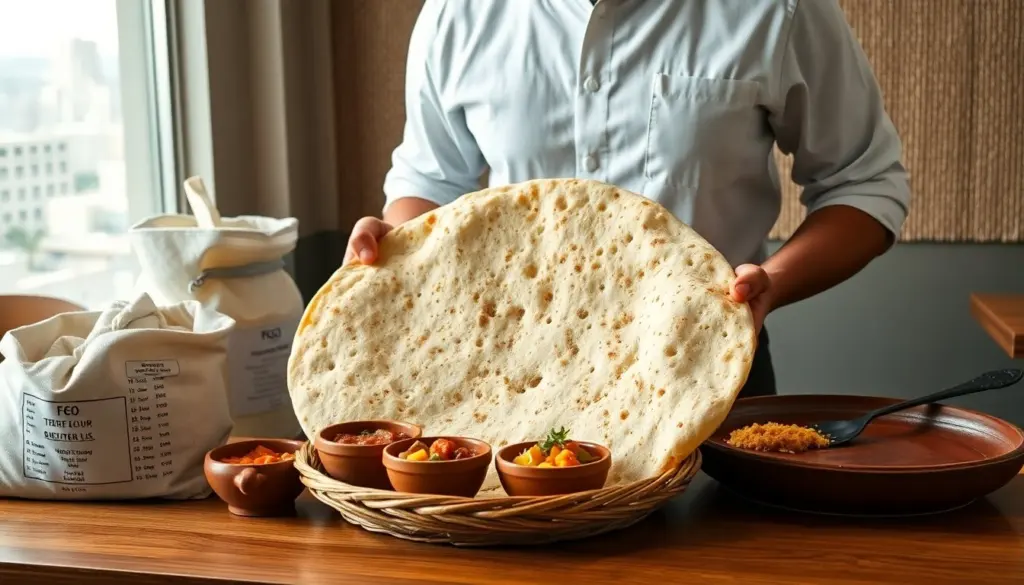
Injera is the staple Ethiopian food bread served with stews and vegetables. It began in the Ethiopian highlands where farmers used teff grain. People ferment teff flour to create a sour batter. The batter produces a spongy, slightly sour flatbread with many small holes. Diners use injera as a plate and as an eating tool. Hosts lay a large injera on a platter and place stews on top. Guests tear pieces and scoop food into their mouths. The bread carries flavor and sauce. Visitors often note the earthy taste and soft texture. In Ethiopia, injera marks communal meals and celebrations. Street vendors and homes both make it daily. The bread links food to culture and shared eating.
How Injera Is Made: Ingredients, Batter, And Cooking Technique
Makers use teff flour, water, and time to make Ethiopian food bread. Teff provides a mild, nutty flavor and a gluten-free structure. Home cooks sometimes mix teff with barley or wheat to change texture. They combine flour and water and let the mixture ferment for one to three days. Fermentation creates the sour notes typical of injera. The batter must reach the right thickness: it should flow slowly like pancake batter. Cooks heat a flat skillet or clay griddle and wipe it clean with a paper or cloth. They pour a thin layer of batter in a spiral and cover the pan briefly. Steam cooks the injera from the top and creates holes on the surface. When the injera lifts from the pan, the cook removes it and sets it to cool on a cloth. Bakers stack injera and store it wrapped to keep moisture. The method needs patience and simple tools.
Fermentation Tips And Common Problems When Making Injera At Home
Home cooks test the batter early to avoid failure. They smell the batter to judge fermentation: a mild sour smell indicates readiness. If the batter smells rotten, they discard it. They keep the batter at room temperature to speed fermentation in cool climates. They refrigerate the batter to slow fermentation when it becomes too sour. If the batter does not form holes, the cook checks the flour ratio and fermentation time. They add a small amount of starter from a previous batch to encourage bubbles. If the injera tears, the pan may be too hot or the batter too thin. If the surface stays wet, the cook increases heat slightly or reduces batter thickness. They practice once or twice to gain a feel for timing and heat. Each attempt improves texture and hole formation.
Other Traditional Ethiopian Breads: Dabo, Ambasha, And Regional Variations
Ethiopian food bread goes beyond injera to include several baked loaves. Dabo is a yeast-leavened bread that people eat at breakfasts and ceremonies. Bakers shape dabo into round loaves and often add spices like cardamom or berbere. Ambasha is a slightly sweet, braided bread served at holidays and weddings. Families sometimes add butter and honey to ambasha before serving. In some regions, people bake flatbreads flavored with herbs or sesame. Highland communities favor teff-based injera while lowland groups mix grains. Urban bakers often fuse Ethiopian styles with European techniques to create sandwich breads and rolls. Markets sell smaller breads for snacks and street meals. These breads show how Ethiopian food bread adapts to occasion and local taste.
Serving, Eating Etiquette, Storage, And Where To Try Authentic Ethiopian Bread
Servers arrange injera as a base and place stews on top. Diners tear a piece of injera with their right hand and scoop food with it. Hosts expect guests to eat from the shared platter to show trust and unity. People store injera wrapped in cloth at room temperature for one to two days. Refrigeration can dry the bread: cooks wrap it tightly to keep moisture. For longer storage, they freeze injera and reheat it briefly before serving. Travelers can try authentic Ethiopian food bread at local restaurants and community meals. Ethnic markets and bakeries in many cities bake fresh injera daily. Food festivals and cultural centers often host communal meals where visitors can learn proper etiquette and taste multiple breads.