Traditional Argentinian food is built on beef grilled over open flame (asado), stuffed empanadas, breaded milanesas and corn-and-pumpkin locro, eaten with a late dinner. Regions change the details, and lamb leads in Patagonia.
For the wider picture of eating well while travelling, see our guide to adventure travel food and culture.
How Argentine cooking took shape
Argentine cooking is a blend of local ingredients and imported traditions, anchored by beef. According to the Academy of Nutrition and Dietetics, Argentina once had the highest beef consumption in the world, and beef appears in empanadas, milanesas and locro as well as on the grill.
Immigration explains much of the rest. Between 1870 and 1930, more than 7 million immigrants came from Europe, and the same source describes milanesa as a variation of an Italian dish and empanadas as stuffed pastries from Hispanic heritage. Locro is the native counterpart: a dish of corn, pumpkin and meats.
The practical result for a visitor is that the menu is more varied than the steakhouse stereotype suggests. A single day can take you from a native stew to an Italian-style cutlet to a grill. The asado is the best place to begin.
Asado: the grill at the centre of the table
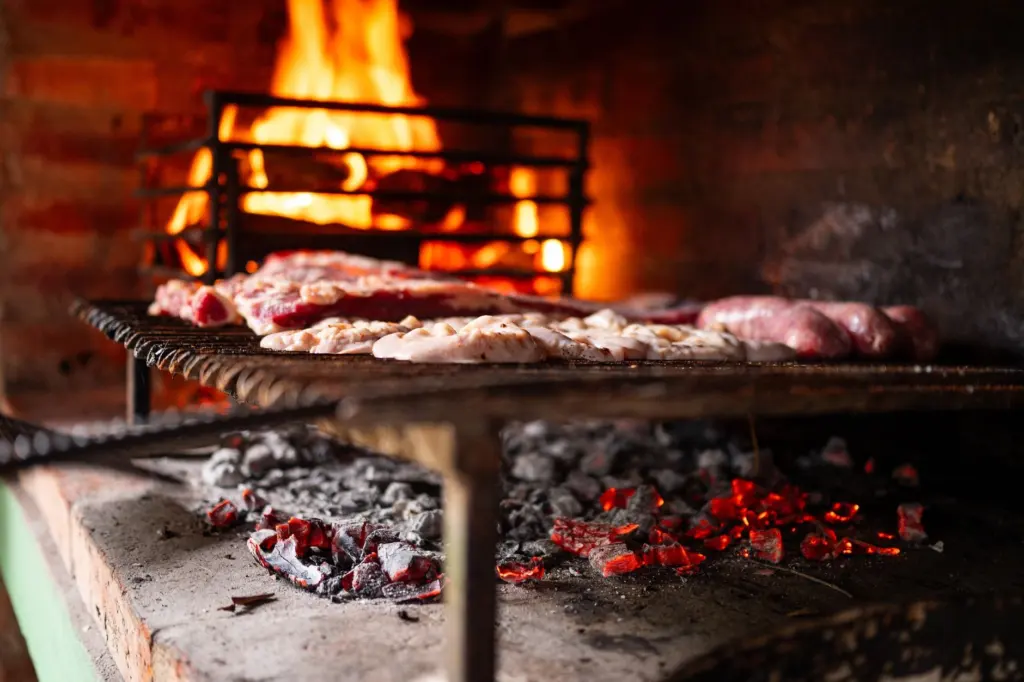
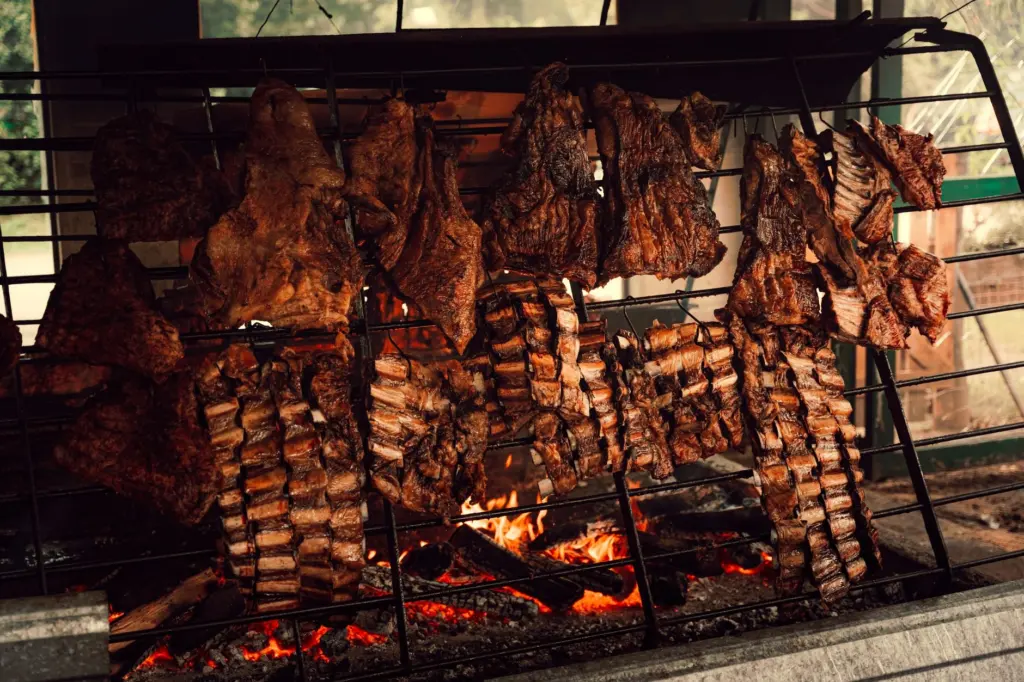
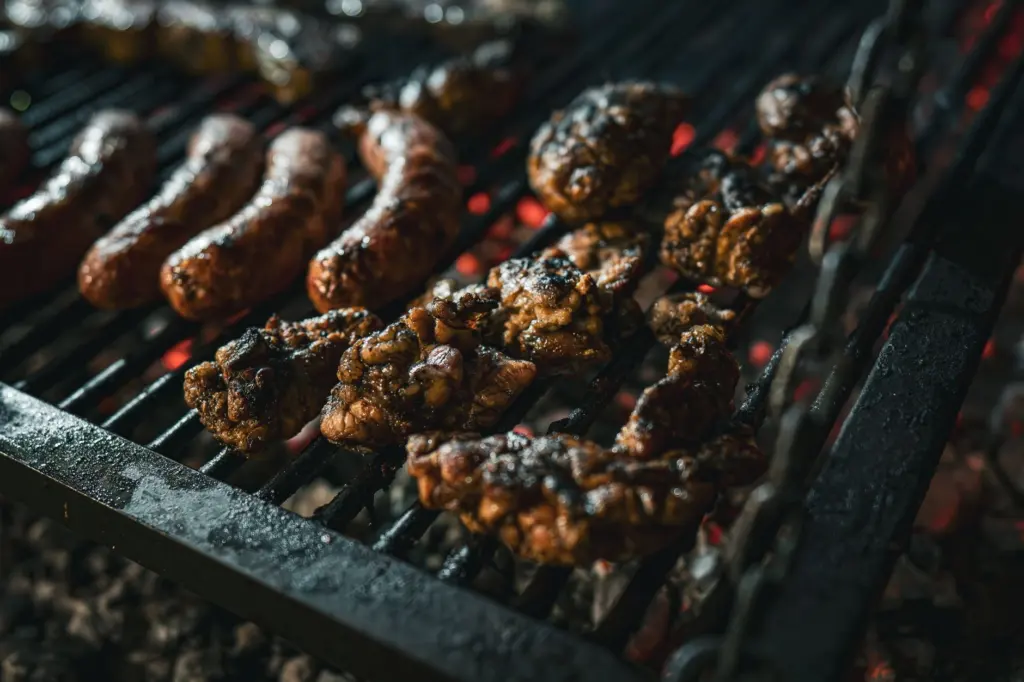
An asado is barbecued beef cooked on an open flame and served with chimichurri sauce, as the Academy of Nutrition and Dietetics describes it. It is both a dish and a style of social meal.
Fire and parrilla
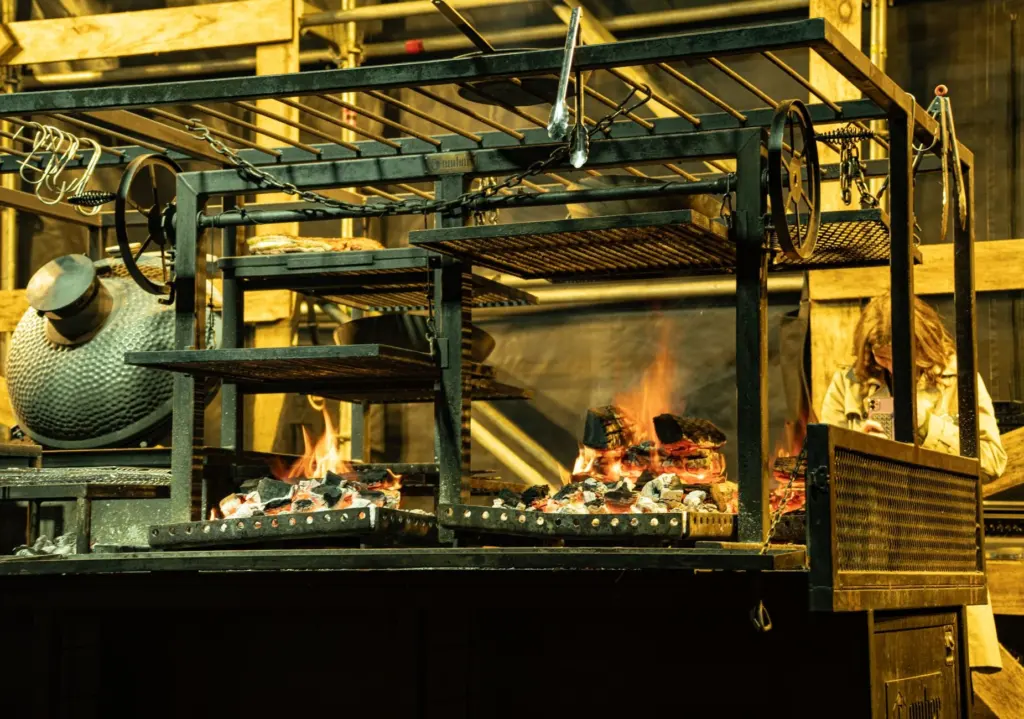
Proper asado cooking is done on a parrilla, a large iron grill, according to Wandering Wagars. That is why restaurants that specialise in grilled meat are called parrillas, and why the word on a menu or sign tells you what to expect: meat cooked over fire, not pan-fried.
Cuts you will see
Travel guides list a core set of asado cuts, and learning them makes ordering easier. According to Ask Lucy’s Argentine food guide, the common ones are:
- Bife de chorizo: sirloin, a straightforward steak choice.
- Ojo de bife: ribeye, for diners who prefer a richer steak.
- Entraña: skirt, which suits diners who want a more textured cut.
- Vacío: flank, a common choice at a shared grill.
Chimichurri is the sauce that goes with all of them. Epicurious calls it the iconic sauce of parrilla culture, so expect it on the table wherever grilled meat is served.
Beyond the grill: empanadas, milanesa and locro
Three dishes carry most of the everyday menu away from the parrilla, and each points to a different part of the country’s heritage. The table below compares them with the grill and a southern stew.
| Dish | What it is | Regional detail | Planning use |
|---|---|---|---|
| Asado | Barbecued beef on an open flame, served with chimichurri | Lamb-focused in Patagonia | The main event; order beef elsewhere and lamb in the south |
| Empanadas | Stuffed pastries from Hispanic heritage | Salteñas: spiced beef, potatoes and hard-boiled eggs. Mendocinas: beef with hard-boiled eggs and green olives | Compare fillings from province to province |
| Milanesa | Breaded meat fillet, a variation of an Italian dish | Beef is central to Argentine cooking generally | A familiar-format option if you want a lighter-style plate than a full grill |
| Locro | Stew of corn, pumpkin and meats | In the Northwest: corn, beans and meats | A hearty native stew worth trying where it is a local speciality |
| Centolla stew | King crab stew | From Ushuaia, Tierra del Fuego | A southern seafood choice |
Descriptions of the dishes come from the Academy of Nutrition and Dietetics, and regional fillings and the crab stew from a regional food guide to Argentina.
Empanadas
Empanadas are the easiest dish for comparing regions, because the filling changes with the province. A salteña in the Northwest and a mendocina from Mendoza both contain beef and hard-boiled egg, but the first adds spiced seasoning and potatoes while the second adds green olives. Order two different types at one sitting and the regional difference is obvious.
Milanesa
Milanesa is the Italian side of the story. It is a breaded meat fillet, so it suits anyone who wants something simpler than a mixed grill. It also shows the effect of the European immigration noted earlier.
Locro
Locro is the native dish of the group. The corn-and-pumpkin version is the one the Academy of Nutrition and Dietetics describes, while the Northwest version uses corn, beans and meats. If you want a stew, ask what goes into the local one rather than expecting a single recipe.
If you like comparing how different cuisines build comfort food around stewed staples, Gomen: How To Make And Enjoy Ethiopia’s Savory Collard Greens (2026 Guide) covers a very different vegetable-led dish.
Regional food and what to eat in Patagonia
Patagonia is lamb country. According to a regional food guide to Argentina, its characteristic ingredients are lamb, king crab (centolla), trout and salmon, and calafate berries, and its asado style is lamb-focused.
Cordero patagónico
The signature dish is Patagonian lamb, roasted on a cross over open flames. If you reach the region by road or trail, this is the meal to choose over a default steak, because it reflects what the region produces. Treat the beef cuts above as the baseline for the rest of the country and lamb as the southern exception.
Seafood and berries in the far south
In Tierra del Fuego, a king crab stew from Ushuaia is a regional dish worth seeking out if you finish a trip there. Trout and salmon suit visitors who want something lighter than red meat, and calafate berries are the local fruit to look for in desserts or preserves.
If you are packing for a hike rather than sitting down to dinner, our notes on what to buy at local markets for hiking snacks cover the shopping side.
Meal structure, timing and mate
Argentines usually have four meals per day, according to the Academy of Nutrition and Dietetics. The day is light at the start and heavy at the end.
From breakfast to dinner
- Breakfast: a simple meal of café con leche (coffee with milk), pastries, or toast with butter, jam or dulce de leche.
- Merienda: an afternoon snack around tea time, 5 p.m.
- Dinner: the largest meal of the day, served late and rarely before 8 p.m. or 9 p.m.
Visitor-facing guidance is similar: according to Ask Lucy, dinner starts at 9pm and restaurants fill at 10pm. The practical decision is simple. Do not plan an early dinner, and use the afternoon merienda to bridge the gap rather than arriving hungry at a kitchen that is still preparing.
Mate between meals
Mate is the drink that fills the spaces between meals. A regional guide describes the Northeast as the area where mate culture is strongest, with mate drunk at every hour of the day. That makes it a social habit as well as a beverage, and one you are likely to see in parks and public places as you travel.
Frequently asked questions
How long does a Sunday asado last?
According to Ask Lucy’s Argentine food guide, a Sunday asado runs for 4-5 hours, so treat it as the main plan for the afternoon.
What is chimichurri made of?
Wandering Wagars lists chopped fresh parsley, oregano, garlic, olive oil, vinegar and red pepper flakes.
Does mate contain caffeine?
Yes. The Academy of Nutrition and Dietetics says mate contains a moderate amount of caffeine and antioxidants.