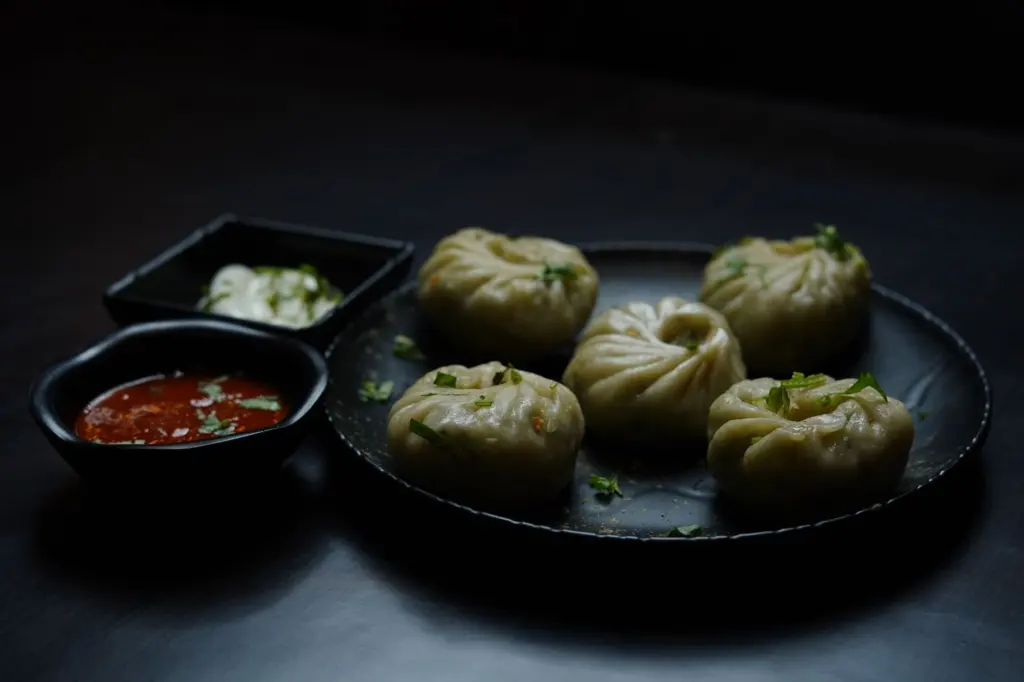
Wondering what to order at a Kathmandu stall or trail teahouse? Momo Nepali food means dumplings that are mainly steamed, filled with buff, chicken, paneer or vegetables, and dipped in achar; Nepal Tourism Board calls them probably the country’s most popular fast food.
Momo is one of the clearest examples of adventure travel food and culture, eaten on city streets and at trail stops alike. The sections below correct the misunderstandings that most often change what travelers order.
What momo are, and what people get wrong
Momo are stuffed dumplings, and the Nepal Tourism Board describes momo as a “must eat” Nepali dish that is said to have originated in Tibet and been brought to Nepal by Newari traders. The same page calls it probably the most popular fast food dish of Nepal, enjoyed by domestic and foreign visitors. A Tibetan origin story does not make momo a borrowed dish: street vendors, upscale restaurants and home kitchens throughout Nepal all serve it.
Most confusion comes from assuming one fixed recipe. The table sets common assumptions against what the sources support.
| Common assumption | What is supported | Planning use |
|---|---|---|
| Momo are always steamed | Mainly steamed, but also fried, served in soups called jhol momos, or prepared as chaats | Steamed is the baseline; ask for jhol or fried if you want something different |
| Momo means meat | Fillings include minced chicken, mutton, buff, grated paneer, cheese or vegetables | Vegetarians have real options, so ask for the vegetable or paneer version by name |
| There is one Nepali style | Nepal has no single cooking style, and food habits differ by region | Expect shape, spice and dip to change from place to place |
| Buff is a lesser filling | Kathmandu’s old guard calls the buffalo momo the true momo, for its depth and juiciness | Try buff at least once if you eat meat |
| Jhol momo is a modern import | A Nepal travel guide says jhol momo was born in Kathmandu | Look for it in the capital before the trail |
Descriptions in the table come from the Nepal Tourism Board food page and a Nepal travel guide to momo.
Fillings in Nepal
Common fillings in Nepal run from buffalo to vegetables, and which one is standard depends on where you eat. The Nepal Tourism Board lists minced chicken, mutton, buff, grated paneer, cheese or vegetables. Choose by what you eat, not by what you assume is traditional.
- Buff (buffalo): a travel guide calls it the Kathmandu classic. Buff momo suits anyone who wants the filling locals defend most loudly.
- Chicken: the same guide calls chicken the safe default, which makes it the easy first order if you are unsure of a kitchen.
- Pork and mutton: pork appears in the guide’s list and mutton in the NTB list, so availability depends on the kitchen.
- Paneer, cheese and vegetables: these are listed by NTB alongside the meats, so vegetarian momo is part of the standard range, not an afterthought.
One travel-company account says the original yak filling was replaced with options such as buffalo, chicken and vegetarian fillings. That history explains why meat momo today usually means buff or chicken.
Steamed, fried or in broth
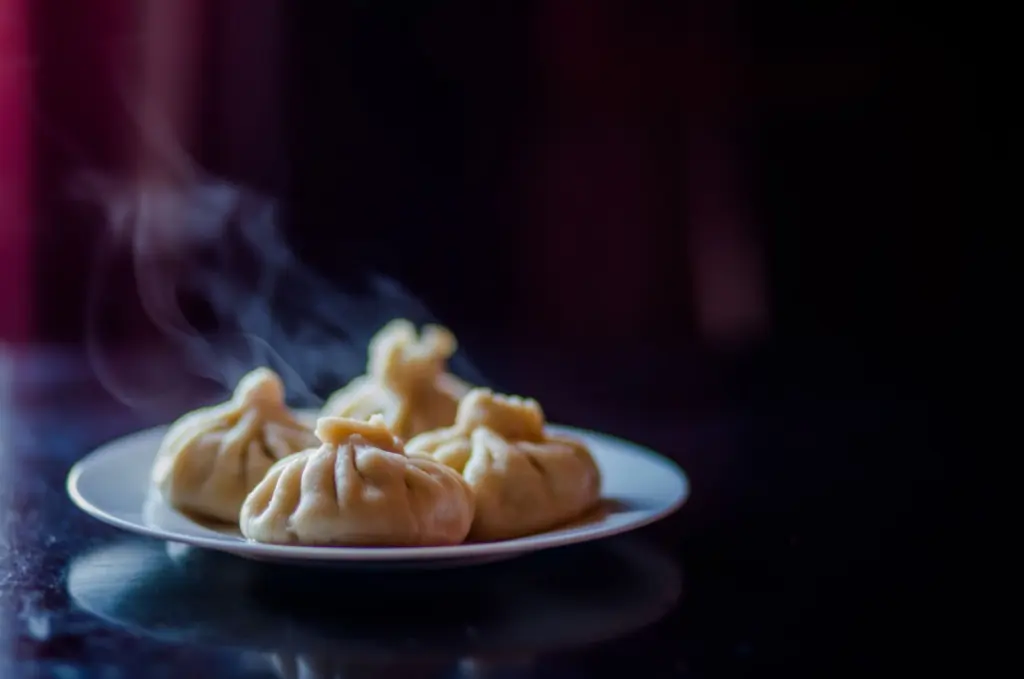
Steamed is the default, so judge a stall by its steamed plate first. NTB notes that momos are mainly steamed, but also fried, dropped in soups called jhol momos, or prepared as chaats.
Fried momo gives a crisp contrast, and chaat versions are an option for adventurous eaters. Jhol momo suits cold evenings, since the dumplings come in a hot broth rather than beside a dip. If you order only one style, make it steamed so you taste the wrapper and filling on their own.
Achar and the dips that finish the plate
Achar is a sauce or dip, and the NTB uses the word for the sauce or dip served with the dal bhat set. Momo achar follows the same idea of a sharp, seasoned side to cut through the filling.
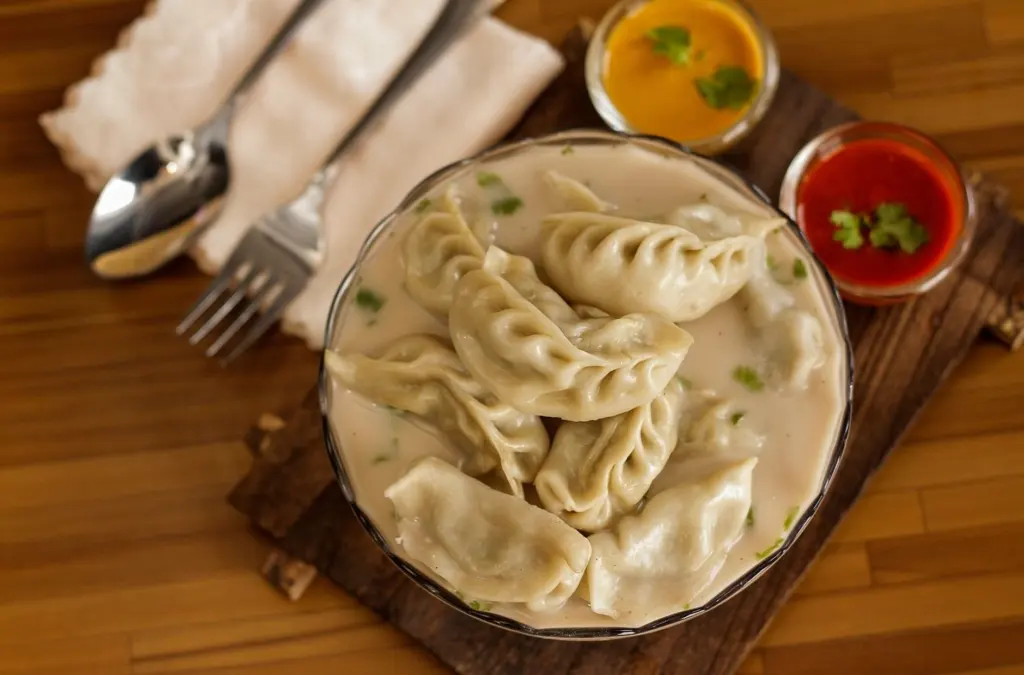
- Orange achar: a travel guide says the orange standard blends tomato, sesame and garlic. It is the mild starting point.
- Red achar: the same guide says the red version adds real chilli, so taste a small amount first.
- Sour notes: NTB says chuk, a lemon concentrate, is often added to achar and chutney to enhance the sour taste.
Where trekkers can eat momos
Trekkers can eat momos in Kathmandu before departure and in teahouses along the trail. Nepal’s momo scene covers both the capital’s old lanes and mountain dining rooms.
Kathmandu
A Nepal travel guide calls Kathmandu the momo capital, pointing to old Newar quarters and no-sign lunch rooms around Asan and New Road. NTB adds that authentic Newari and Thakali cuisine is available in a large number of eateries spread all over the valley. That makes the city the best place to compare buff, chicken and vegetable momo side by side before you leave.
On the trail
On trek, teahouse momos are hand-folded to order. The practical consequence is a wait, so order early in the evening and treat momo as a planned stop rather than an instant snack. Hand-folding also means the filling on offer depends on what the kitchen has stocked, so ask before you commit.
Food safety and allergies on the trail
Momo can be a sensible trail meal when freshly cooked, but no street or teahouse dish is risk-free, and your national travel health agency is the right place for broader food and water guidance.
- Eat them made to order: teahouse momos are folded to order, which suits eating them straight from the steamer rather than from a plate that has been sitting.
- Check doneness: a recipe from BBC Good Food says steamed momos should look transparent and not feel sticky when fully cooked. Use that as a cue, and send back anything that looks pale and tacky.
- Start with chicken if unsure: a travel guide calls chicken the safe default.
- Ask about allergies directly: a Manchester momo restaurant advises that diners with allergies must check the restaurant’s current ingredients and cross-contact guidance. The same habit applies in Nepal: ask the kitchen rather than assuming.
Prices and portion size
A Manchester restaurant’s momo page gives a price reference outside Nepal: six dumplings with tomato chutney, with a dine-in price of £11.95 at publication. The page advises checking the current menu before visiting, and it lists minced lamb, chicken or vegan fillings. Use it as a diaspora dining reference, not as a guide to street prices in Nepal. When ordering in Nepal, ask how many pieces come in a plate, since each kitchen sets its own serving.
Making momo at home
Home cooks can copy the basic method before or after a trip. The BBC Good Food pork momo recipe divides the dough into 20 balls, each weighing about 15 g, and steams the dumplings for 10 minutes, in batches. Small, even wrappers matter because they cook at the same rate, and a shared steamer keeps the plate hot while you finish folding.
More dishes for the food itinerary
Momo makes a good anchor for a trip built around eating. For a different kind of comfort food, compare it with Shiro: Ethiopia’s Comforting Chickpea Stew — How To Make, Eat, And Find It In 2026, and for another cuisine shaped by travel and climate, read Beyond The Steppe: A Practical Guide To Traditional Mongolian Food In 2026.
Frequently asked questions
| Question | Answer |
|---|---|
| What is jhol momo? | Jhol momo is steamed momo served in a warm sesame-tomato broth. A Nepal travel guide says it was born in Kathmandu. |
| Are there vegan momos? | Yes, some menus offer them. The Manchester restaurant’s momo guide lists a vegan filling beside minced lamb and chicken, and NTB lists vegetables among traditional fillings. |
| What is timur in momo achar? | Timur is wild pepper, also known as Sichuan pepper. A travel guide says the best achar includes it. |
| How long do momos take to arrive? | Made-to-order momos take time. The Manchester restaurant warns that preparation can take more than 20 minutes. |