Shiro ethiopian food is a creamy chickpea-flour stew, not a pot of whole chickpeas: cooks stir ground chickpea flour into onion, tomato and spices, then scoop the result up with injera.
Most confusion comes from the name, the spelling and the spice. This guide clears up those misunderstandings first, then covers quantities, technique, eating habits and ordering. It belongs to the wider picture of adventure travel food and culture, where knowing a dish before you order it saves guesswork.
What shiro is, and what people often assume
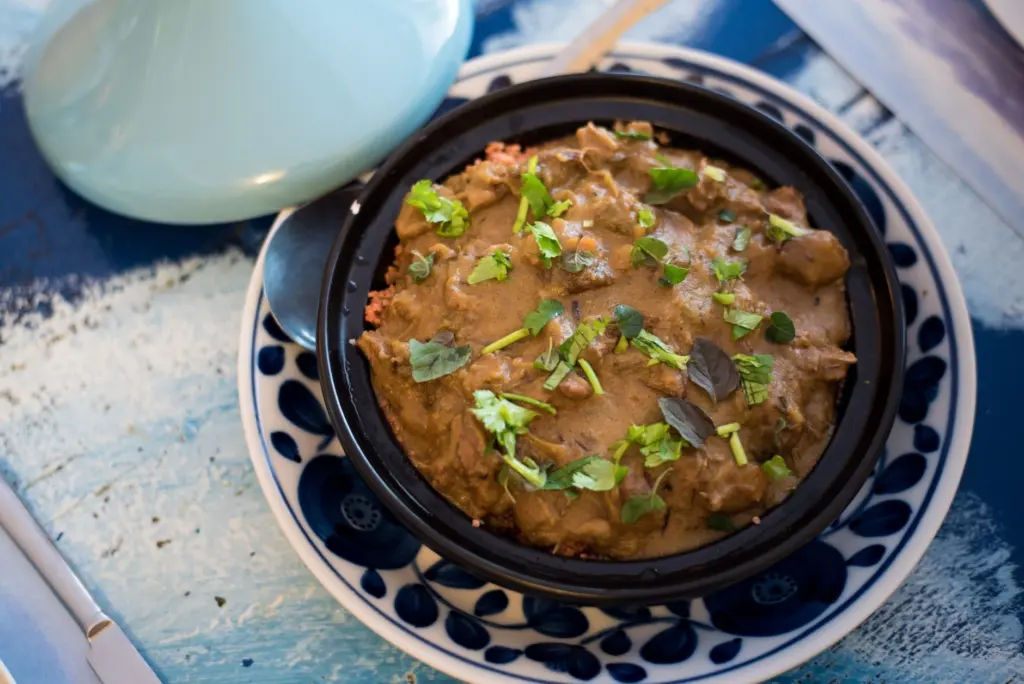
Shiro is a traditional Ethiopian stew made from chickpea flour. SBS Food describes it as chickpea flour cooked in onion, tomatoes and spices until creamy. Another recipe calls the dish Shiro Wat and describes it as primarily chickpea flour and berbere spices. The flour is the key to everything that follows, because it dissolves into the liquid instead of staying in pieces.
The flavour is earthy and fragrant, with chickpea flour, garlic and ginger doing most of the work in one recipe. The body is closer to a spiced porridge than a brothy soup: that same recipe describes a porridge-like consistency, with some texture from chopped chickpeas. Diners who expect a sharp, tomato-forward curry will find it softer and more savoury than that.
| Common assumption | What the recipes show | Planning use |
|---|---|---|
| It is made from whole chickpeas | The base is chickpea flour cooked in onion, tomatoes and spices until creamy | Read it on a menu as a stew, not a side of beans |
| It is a thin soup | Texture runs from runny to thick and smooth to chunky; one recipe is porridge-like | Expect a spoonable, bread-clinging stew rather than broth |
| It needs a spoon | It is ladled into bowls and served with injera | Plan to eat it with bread as the utensil |
| Berbere is the only possible spice | Berbere is named in one recipe; a fusion version uses curry powder and light coconut milk instead | Treat berbere as the spice in the traditional-style version, and check the pot if you want that flavour |
Figures and descriptions in the table come from SBS Food and a shiro wat recipe from Monkey and Me Kitchen Adventures.
Regional and cook-to-cook variation
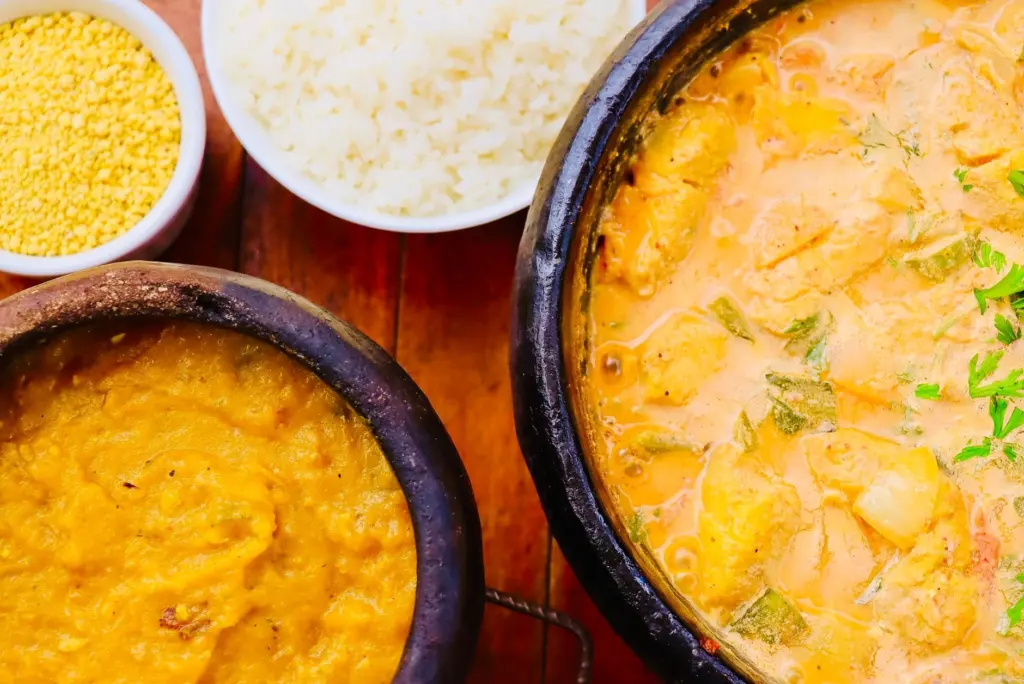
Shiro is not one fixed recipe, and the clearest variable is texture. SBS notes that it varies from runny to thick and from smooth to chunky, adjusted to preference and region. Regional detail beyond that is best learned by asking the cook, because the dish bends to the pot in front of you.
- Texture: the stew thickens as it simmers, and Brundo’s recipe adds water as needed to reach the desired thickness. Water is the adjustment you control.
- Fat: Brundo uses neutral oil or Niter Kibbeh, a spiced clarified butter. SBS uses olive oil together with Ethiopian spiced butter.
- Spice: berbere is the spice named in the traditional-style shiro wat above. Brundo’s recipe uses Bessobela instead, and the fusion version swaps in curry powder.
- Liquid: water is the norm in the traditional recipes. The fusion version adds light coconut milk, so treat it as a departure from the original rather than a regional style.
If you are choosing between a looser and a thicker bowl, ask for the texture you prefer. Because the recipes treat consistency as adjustable, a reasonable cook can usually accommodate it.
Ingredients and quantities
Two published recipes give a sensible range for a home batch, and they differ in scale, so choose the one that matches how many people you are feeding.
The SBS recipe serves 2-3 and uses:
- 3 tsp chickpea (shiro) powder
- 170 ml hot water
- 1 tbsp Ethiopian spiced butter and 2 tbsp olive oil
- 1 red onion, finely chopped, and 1 tbsp garlic paste
- 2 Roma tomatoes
SBS uses Australian measures, where 1 tablespoon equals 20 ml and 1 cup equals 250 ml. Check this if your own spoons or cups differ.
The larger Brundo recipe calls for:
- 1 cup shiro powder
- 1/2 cup minced onion and 1/4 cup minced garlic
- 1 finely diced tomato
- 1/2 cup neutral oil or Niter Kibbeh
- 1 tsp Bessobela and 1 tsp salt
- 5 cups water
A third route builds on plain chickpea flour: the fusion recipe uses 1/2 cup chickpea flour and a 15 oz can of chickpeas with 3/4 to 1 1/4 cups water and 1 to 1 1/4 cups light coconut milk. It serves 4 and makes 4 cups. Use it only if you want the coconut-and-curry variation, not the traditional profile.
Do not mix quantities between recipes. Each one balances powder, liquid and fat for its own batch size, so follow one set and adjust only the water.
Cooking shiro without lumps
The main technical risk is lumpy stew, and the fix is to stir the powder in frequently. Brundo’s instructions pour the shiro powder into boiling water and stir frequently so the mixture is not lumpy. SBS rates its version easy, with 10 minutes of preparation and 20 minutes of cooking.
- Prepare the base. Chop the onion, garlic and tomato, and measure the fat and spice. Both recipes build the stew around these.
- Stir the powder into boiling water. Keep stirring frequently as it goes in.
- Hold a high heat for about 4 minutes, then drop to a simmer, as Brundo directs.
- Adjust the water. The stew thickens as it simmers, so add water as needed to reach the thickness you want.
- Serve in bowls, sprinkled with chilli, with injera alongside, as SBS finishes it.
Leftovers keep about 5 days in the refrigerator in an airtight container, according to the fusion recipe. Because the stew thickens as it sits and simmers, loosen reheated portions with a little water.
Eating shiro and finding it while travelling
Shiro is eaten with injera, and the bread does the job of a spoon. SBS says to ladle it into bowls and serve with injera, and the fusion recipe describes flatbread as something to scoop with. In practice, tear off a piece of injera, press it into the stew and eat the bread and sauce together. If you are unsure of local table customs at a particular meal, watch how the others at the table handle the bread and follow them.
Ordering on the road
Look for the dish under both of its common spellings, shiro wot and shiro wat. Because the base is a powder stirred into boiling water, shiro is a quick dish to prepare: the SBS recipe lists a total of 10 minutes of preparation and 20 minutes of cooking. That speed suits a guesthouse or base-camp kitchen, though that is a judgement from the timing, not a claim about any particular route.
Two questions are worth asking before you order. First, ask which fat the cook uses, since recipes use either Niter Kibbeh or plain oil, and olive oil with spiced butter in the SBS version. Second, ask how thick the stew is served. If ingredients matter for your diet, the same questions apply on the trail, and the guide on how to handle dietary restrictions on a guided trek shows how to raise them with guides and camp cooks.
Buying ingredients to cook it yourself
Recipes call for ready-ground shiro powder, so a traveller who wants to cook the dish later can start from that rather than milling chickpeas. Ethiopian spice sellers such as Brundo say they work with spice growers and farmers across Ethiopia, which is one route to the spices if you cannot buy them locally. For another street-food comparison on a food-led itinerary, see Momo Nepali Food: The Ultimate Guide To Nepal’s Steamed Dumpling Delight (2026), which covers a very different dish built for the same kind of eating on the move.
Frequently asked questions
| Question | Answer |
|---|---|
| What else is chickpea flour called? | It is also known as garbanzo bean flour, gram flour and besan flour, so any of those can stand in when you shop for shiro ingredients. |
| How long do leftovers keep? | About 5 days in the refrigerator, stored in an airtight container. |
| What can I serve with shiro besides injera? | Naan, pita, lavash and other flatbreads work as scoops, according to the fusion recipe, though injera remains the traditional partner. |
| Is shiro always smooth? | No. It ranges from runny to thick and from smooth to chunky, so ask for the style you prefer or adjust the water at home. |