The best guatemala volcano hike for most travellers is a guided overnight climb of Acatenango, which gives front-row views of erupting Volcán de Fuego. It is a long uphill effort, so fitness and warm layers decide whether it suits you.
This guide compares the Acatenango options by difficulty, cost and safety. It is one entry in our wider look at the best adventure travel destinations.
Acatenango and Fuego: Two Volcanoes, One Trip
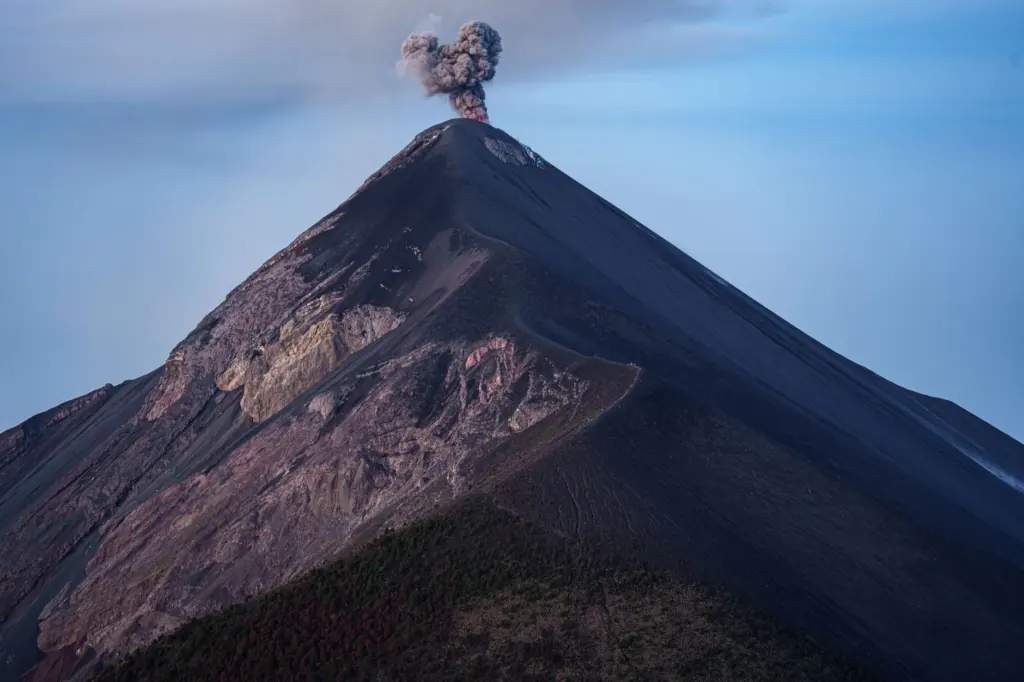
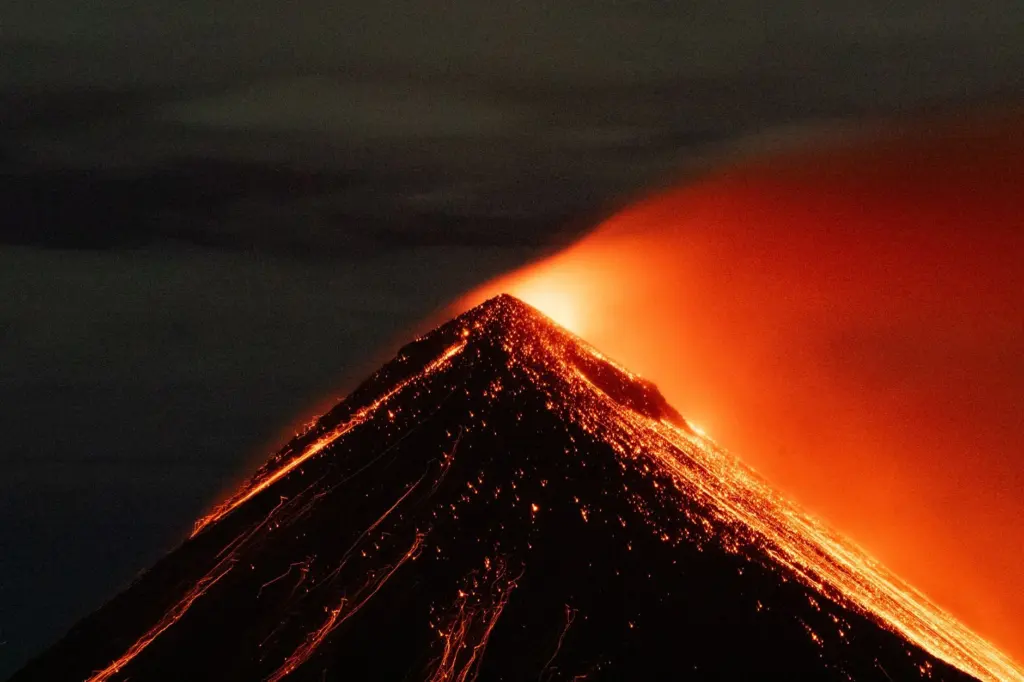
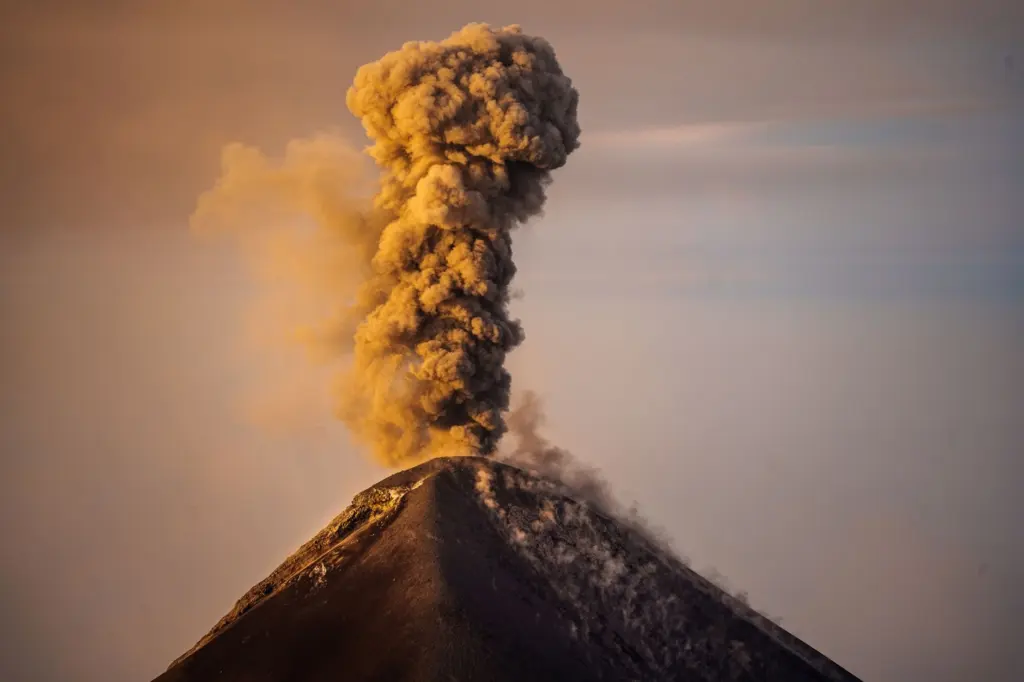
Acatenango is the volcano you climb, and Volcán de Fuego is the one you watch or add on. Acatenango’s summit stands at 3,976 m (13,041 ft). Fuego is far more active: it erupts about every 15 minutes, while Acatenango’s last big eruption was in 1972. That contrast explains the usual plan. You camp on the quieter, climbable mountain and look toward the active one.
The route itself is varied. The climb passes through four microclimates: farmland, cloud forest, tropical alpine forest and volcanic rock. You will not walk one uniform trail, and your clothing needs change as you gain height.
What Makes Acatenango Hard
Acatenango is hard because of sustained height gain, a high starting point and cold, not because of technical terrain. The trail from the trailhead to basecamp is a 1,000 m (3,300 ft) ascent to a basecamp at 3,580 m (11,740 ft). You also start high. Antigua sits at only 1,545 m, while the trailhead is near 2,800 m, so the walk begins well above the town where most hikers sleep before the climb.
Temperature is the second factor. One guide notes that it can be 25 °C in Antigua but below freezing on Acatenango. A local guiding outfit adds that stratovolcano microclimates can change very often. Plan for the cold end of that range even if you leave town in T-shirt weather.
Hard does not mean out of reach. The effort is long and steady, so it suits people who can walk uphill for hours with a loaded pack. If you rarely hike, build up with long, hilly walks first rather than treating the volcano as your starting point.
The Overnight Climb in Stages
A typical guided trip follows five stages over two days.
- Leave Antigua Guatemala early. The tour departs from Antigua at 8:00 am on day 1.
- Climb to basecamp. One hiker’s account puts the hike to basecamp at about 4.5 hours. Your own pace and group will vary.
- Spend the night at basecamp. Basecamp is the high, cold point of the trip, so keep your warm layers within reach.
- Push to the summit. From basecamp, the ascent to the summit takes 60 to 90 minutes.
- Descend and return. The same operator lists a 2 to 3 hour descent with a return to Antigua mid-day on day 2. In total, expect about 8-9 hours of hiking over 2 days.
Most of the effort comes on the first afternoon. Save energy for the summit push rather than arriving at basecamp exhausted.
Tour Costs and Add-Ons
Group size drives the price of a guided Acatenango trip. A public tour with one operator costs less per person as the group grows, and a private departure costs more per person than a public tour for the same two guests. Treat the lowest figure as available only if you can fill a group.
| Option | Price | Planning use |
|---|---|---|
| Public tour, 2 guests | USD 329 per guest | Fits couples or pairs who are happy to travel with a booked group |
| Public tour, 4+ guests | USD 249 per guest | The lowest per-person rate listed, so worth organising a group of friends |
| Private tour, 2 guests | USD 419 per guest | Suits hikers who want their own pace and schedule |
| Fuego Fireworks add-on | USD 79 per guest | A challenging 2-3 hour out-and-back hike from basecamp, for the strongest hikers |
| Double Summit add-on | USD 189 per guest | The costliest extra listed; ask the operator exactly what it adds before paying |
These are the published rates of one operator running the trip from Antigua, taken from its Acatenango tour listing, so compare other operators and ask what each price includes.
Choosing Your Route
The standard overnight Acatenango hike is the best starting point, and the extras only make sense once you know how you cope with altitude.
- Standard overnight climb. This suits most reasonably fit hikers. It gives the summit, the night at basecamp and the Fuego views for the lowest cost and effort.
- Fuego Fireworks add-on. Choose it only if you are strong and want a closer look at the active volcano. The operator describes it as a challenging 2-3 hour out-and-back hike from basecamp, which is extra work on top of an already demanding day.
- Double Summit add-on. This is the most expensive extra, so confirm its details with your operator and decide only after you have checked your fitness against the standard route.
- Private departure. Pay the premium only if a flexible pace matters more to you than cost.
Guides, Porters and Safety
Yes, you should hire a guide for Acatenango. One detailed hiking guide answers the question of going unguided plainly with “don’t do it” and reports that people die attempting the overnight climb every year. A guide supplies route knowledge, pacing and a response if someone struggles with the cold or altitude.
Operators also handle some of the physical load. One lists a bilingual English and Spanish guide with certified first-aid training and porters who each carry up to 20 lbs (9 kg). That limit is a ceiling, not a target, so ask exactly what the porter takes and keep essentials for the cold in your own bag.
Before booking, ask the operator how they respond to changes in volcanic activity and weather. Plans should bend to conditions, not the other way around.
Best Months and What to Pack
Plan for the dry season. Antigua has a 6-month dry season from November to April, with the wet season running May to October. Even then, remember that the summit can be far colder than town.
Pack for the cold and for the carry. The operator recommends a large-capacity backpack of 50 L or more. A hiking blogger prefers a medium 45 L pack and carries 4 L of water. Both point the same way: a pack big enough for insulation, but not so heavy that the 1,000 m ascent becomes a struggle.
- Warm layers. Bring a base layer, an insulating mid-layer and a waterproof shell, because basecamp sits well above the town.
- Sturdy footwear. Wear closed shoes with grip for loose volcanic ground.
- Light and water. Carry a headlamp, sun protection and enough water for the long climb.
- Snacks and a small first-aid kit. These keep you moving when the effort drags on.
Planning the Rest of the Trip
A volcano night works best as one highlight in a longer trip. If you are weighing it against a slower, multi-week walking route, read Camino De Santiago Routes: How To Choose The Best Path For Your Pilgrimage In 2026. For another adventure stop elsewhere, browse 25 Best Things To Do In Queenstown, New Zealand (2026): Adventure, Wine & Scenic Escapes.
Frequently asked questions
Do I need climbing gear for Acatenango?
No. The volcano isn’t technical; there is just a lot of uphill, so boots, layers and fitness matter more than ropes or harnesses.
How far is the Acatenango hike?
One guide gives a total distance of 11 miles (18 km) round trip. That covers the whole outing, not just the first day’s climb.
When does the tour leave and return?
The operator’s trip departs from Antigua at 8:00 am on day 1 and returns mid-day on day 2.
Will altitude make me ill?
It can. One hiker reported a headache on the way up and shortness of breath during the night. Go slowly, tell your guide how you feel, and do not ignore symptoms.