The camino de santiago route draws people who seek long walks and cultural change. The camino de santiago route offers varied landscapes, towns, and pilgrim services. The camino de santiago route fits hikers, day-walkers, and those who travel for spiritual reasons. This guide lists main routes, compares distance and effort, and gives practical steps for planning. It also highlights how to choose a route based on time, fitness, weather preferences, and the kind of experience—social, reflective, or nature-focused—you want from the camino de santiago route.
Key Takeaways
- The Camino de Santiago route is a network of trails to Santiago de Compostela that serves hikers, spiritual travelers, and cultural explorers alike.
- There are several main routes—Francés, Portuguese, and Norte—each offering distinct landscapes, levels of difficulty, and crowd sizes, with the Francés being the most popular.
- Planning is crucial: pilgrims should consider timing, pack lightly with proper footwear, and prepare for varied weather to enhance their Camino de Santiago route experience.
- Accommodation options range from low-cost municipal albergues to private hostels, and booking in advance is advisable during peak seasons on the Camino de Santiago route.
- Pilgrims benefit from using local transport, luggage transfer services, and guided tours to manage logistics along the Camino de Santiago route efficiently.
- To obtain the Compostela certificate, walkers must collect stamps at official stops, emphasizing the importance of keeping records during the Camino de Santiago route journey.
What The Camino De Santiago Is And Who Walks It
The camino de santiago route names a network of trails that lead to Santiago de Compostela in Galicia, Spain. Pilgrims follow the camino de santiago route for spiritual goals, cultural interest, or fitness. Local governments and churches mark the camino de santiago route with yellow arrows and scallop-shell signs. Pilgrims carry a credencial to collect stamps at albergues and churches. Pilgrims meet other walkers and share meals and tips along the camino de santiago route. They vary by age and background. Some walk the camino de santiago route in stages over months. Others walk the camino de santiago route for two weeks or less. The camino de santiago route offers towns with shops and hostels every day on most main paths. Weather changes by season: spring and fall draw the largest groups. Pilgrims choose pace and style. Some camp, some use private rooms, and some stay at municipal albergues. Local volunteers and hospitaleros run many albergues and help pilgrims on the camino de santiago route. The route has historic churches, Roman roads, and modern wayfinding. Governments upkeep sections and add services to the camino de santiago route for safety and tourism. Beyond the physical trail, the camino de santiago route is a cultural corridor: small museums, local festivals, and regional cuisine are part of the daily rhythm, so walkers often plan rest days in key towns to explore local history and food.
Comparing The Main Routes: Francés, Portuguese, And Norte
The camino de santiago route includes several main options. The francés route ranks as the most popular. The portuguese route runs from Portugal along the coast or inland. The norte route follows the northern coast of Spain. Each main camino de santiago route shows different terrain, crowd levels, and services. When choosing, consider seasonality (coastal routes can be windier in winter), the type of scenery you prefer (rolling vineyards vs. sea cliffs), and how much solitude you want. Services such as medical posts, grocery stores, and luggage transfer are more frequent on busier routes, while quieter paths may require more self-sufficiency.
Snapshot Comparison Of Distance, Difficulty, And Typical Itineraries
Francés: The francés camino de santiago route starts in Saint-Jean-Pied-de-Port or Roncesvalles. Walkers cover about 780 kilometers from Saint-Jean. Pilgrims face steady climbs in the Pyrenees and long rural stretches later. Many walkers split the francés camino de santiago route into 30 to 35 daily stages of 20 to 27 kilometers. The francés camino de santiago route offers frequent albergues, shops, and transport connections. Its popularity means busy summer months and a rich social scene in the evenings—good for those seeking community, less ideal for solitude.
Portuguese: The portuguese camino de santiago route starts in Lisbon or Porto. Walkers from Porto cover about 240 kilometers to Santiago. The coastal portuguese camino de santiago route stays flatter and shows sea views. Walkers who start in Lisbon face a much longer path. The portuguese camino de santiago route draws walkers who prefer milder climbs and more towns. The inland Portuguese route weaves through small villages and agricultural areas, offering a mix of urban and rural daily stages and often easier logistics for those traveling from Portugal.
Norte: The norte camino de santiago route starts near Irun on the French border. Walkers on the norte camino de santiago route cover roughly 825 kilometers to Santiago. The norte camino de santiago route keeps walkers close to the sea for long stretches and climbs over coastal hills. The norte camino de santiago route sees fewer crowds than the francés camino de santiago route. The norte camino de santiago route gives strong scenery and quieter towns. Its coastal exposure means weather can be changeable; expect stunning viewpoints and more frequent elevation changes than the Portuguese coastal path.
Difficulty and time: The francés camino de santiago route rates moderate to hard mostly because of distance and occasional climbs. The portuguese camino de santiago route rates easy to moderate on the inland path and easy on the coastal path. The norte camino de santiago route rates moderate due to frequent rolling hills. Beyond raw difficulty, consider cumulative fatigue—consecutive long stages, heavy packs, and limited rest days amplify perceived difficulty on any camino de santiago route.
Typical itineraries: Walkers choose itineraries that match time and fitness. A common plan uses four to six weeks for the francés camino de santiago route. The portuguese camino de santiago route from Porto fits two to three weeks. The norte camino de santiago route fits three to five weeks. Walkers may mix routes and use buses to skip sections of the camino de santiago route. For shorter trips, many walkers select the final 100 kilometers into Santiago (for walkers) to qualify for the Compostela; others choose popular week-long stretches between notable towns. Leave room for rest days or weather delays when mapping daily stages.
Practical Planning And Logistics: Timing, Packing, Accommodation, And Transport
Timing: Pilgrims pick months to match weather and crowds. Spring and fall bring mild weather and many pilgrims on the camino de santiago route. Summer brings higher temperatures and full albergues on the camino de santiago route. Winter brings fewer services on some parts of the camino de santiago route. Shoulder seasons often balance good weather with fewer crowds. When planning, check local festival dates and school holidays that can swell demand for beds on popular sections of the camino de santiago route.
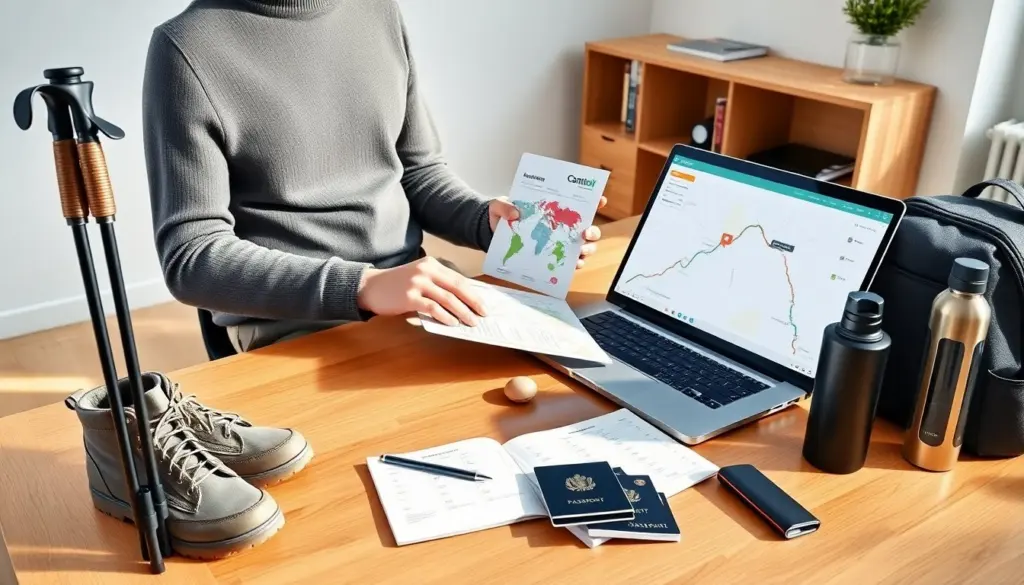
Packing: Walkers pack light to protect feet and balance. Pilgrims choose shoes that fit and socks that wick moisture. Pilgrims pack a rain shell, a sleep sheet, a small first-aid kit, and layered clothing. Pilgrims carry a lightweight daypack and limit weight to about 8 to 10 percent of body weight for a multi-week camino de santiago route. Practical items to consider: a hat and sunglasses, a compact towel, blister patches, a multi-tool, a lightweight water bottle, basic toiletries, a power bank, and copies of important documents (credencial, ID, insurance). Test your pack on longer day hikes before committing to a long stage.
Accommodation: Pilgrims use municipal albergues, private hostels, guesthouses, and hotels. Municipal albergues sell refuge for a low fee and follow first-come rules on busy days on the camino de santiago route. Private albergues let pilgrims reserve beds in advance on peak dates for the camino de santiago route. Pilgrims should carry a credit card and some cash for remote sections of the camino de santiago route. Consider a mix of albergues and private stays to balance cost, comfort, and chance to meet other pilgrims. Check each albergue’s rules—curfews, bedtimes, and kitchen access vary—and bring earplugs and an eye mask for shared dorms.
Transport and logistics: Pilgrims book return travel from Santiago or nearby airports. Trains and buses connect major towns and allow walkers to skip stages of the camino de santiago route. Pilgrims ship gear by courier or use luggage transfer services that move bags between towns. Walking groups and guided tours offer support and local info for the camino de santiago route. If you plan to combine walking with train or bus legs, verify schedules in advance, especially on weekends and holidays. Luggage transfer services save feet and time but add cost—compare providers and confirm delivery windows.
Health and safety: Pilgrims check footwear, stretch daily, and rest when necessary. Pilgrims register emergency contacts and carry travel insurance that covers walking on the camino de santiago route. Local clinics and pharmacies serve towns along main paths for the camino de santiago route. Prevent issues by breaking in footwear well before departure, alternating shoe types on rest days, and managing mileage increases gradually. Know basic signs of heat exhaustion and hypothermia depending on season, and keep a simple plan for emergency transport off the trail if needed.
Budget and permits: The camino de santiago route requires no permit for most walkers. Pilgrims pay for food, accommodation, and transport. Pilgrims who want a certificate must collect a required number of stamps on the camino de santiago route and request a Compostela at the pilgrim office in Santiago. Pilgrims keep records and receipts to meet stamp rules for the camino de santiago route. Budgeting tips: estimate daily costs by route and season, factor in spare days and unexpected expenses, and plan a contingency fund. Many pilgrims mix inexpensive albergues with occasional private nights to control costs while preserving comfort when needed.