Planning things to do in Moab Utah starts with how much effort you want to spend. Choose a park day, a river or bike day, and a drive, matched to your skill level and season.
Moab is one of the standout stops among the best adventure travel destinations, and most planning mistakes come from a few common misunderstandings, sorted out below.
Moab’s four activities, sorted by effort
Moab’s visitor bureau says four things put the town on the map: hiking, mountain biking, river running and off-roading. Arches, Canyonlands, Dead Horse Point and Utahraptor are all about half an hour outside downtown Moab, so one base covers every activity. The common mistake is assuming each activity is either gentle or extreme. Each one has an easy and a punishing end, and the table below puts them side by side.
| Activity | Low-effort choice | High-effort choice | Planning use |
|---|---|---|---|
| Hiking | Park Avenue in Arches or Mesa Arch in Canyonlands: big rock for very little effort | Fisher Towers or the Syncline Loop in Canyonlands: a whole day and most of your water | Start with a short walk, and reserve a full day for the long hikes. |
| Mountain biking | Klondike Bluffs and Bar M: flowy and forgiving | Captain Ahab and the Whole Enchilada; the Slickrock Trail still humbles riders | Match the trail to your technical skill, not to its fame. |
| River running | The Moab Daily: half day of splashy, family-friendly whitewater; calm water above town suits a paddleboard | Longer outfitter trips, which run spring through fall | Book a half day first if the group includes children or beginners. |
| Off-roading | Gemini Bridges and Long Canyon: doable in a stock high-clearance rig | Hell’s Revenge and Fins & Things: steep | Take a guided tour for the steep routes rather than your own vehicle. |
Effort levels and route names come from the Moab visitor bureau’s attractions guide, which also advises hiring local guides for any activity.
Arches and Canyonlands: two parks, two different days
Arches is bigger than one famous hike
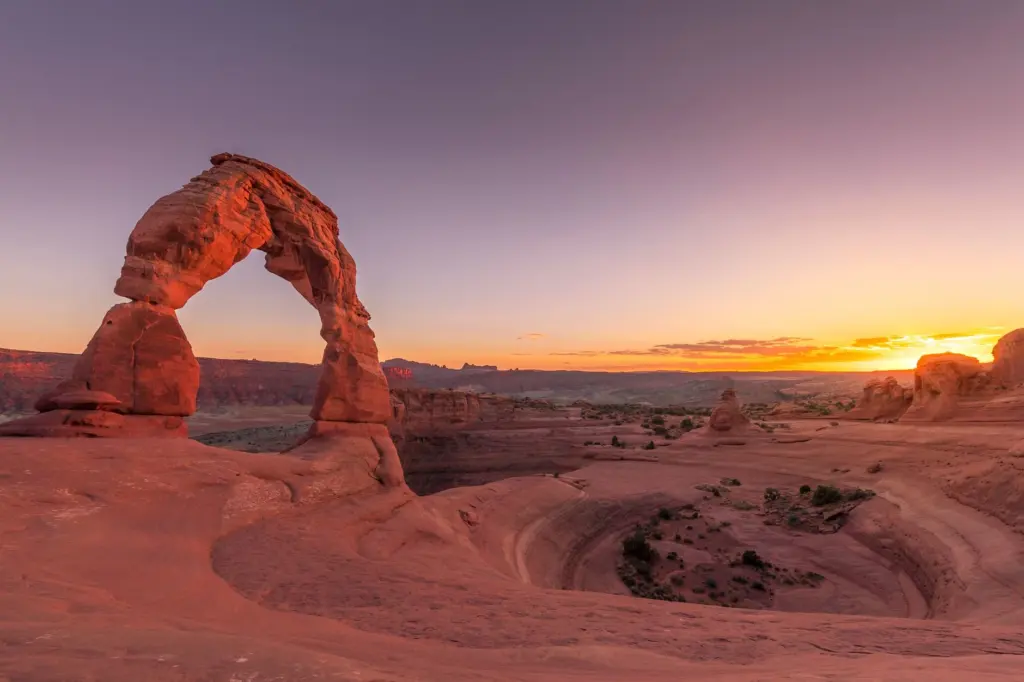
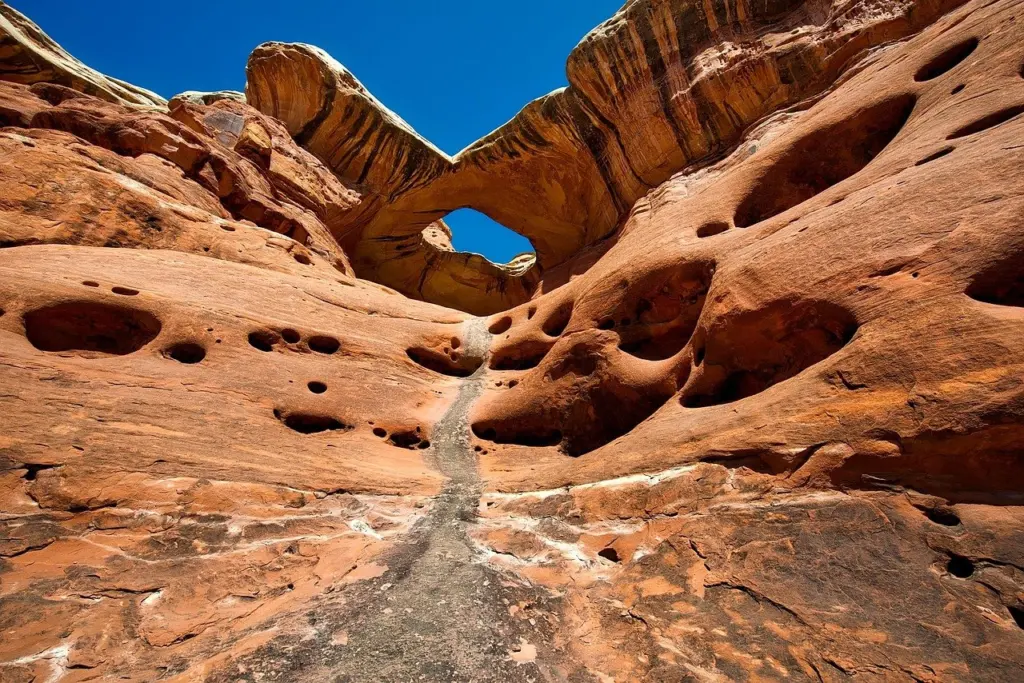
Arches National Park has the largest concentration of natural sandstone arches on Earth, according to the Moab visitor bureau. Many visitors treat it as a single stop for Delicate Arch. That hike is a 2.9-mile round trip with 480 feet of elevation gain, according to one trip planner, so it is a real outing. A family travel blog suggests at least two days in the park if you want to visit all of the hikes on its list. If your time is short, Park Avenue is the low-effort alternative.
Canyonlands is not an add-on
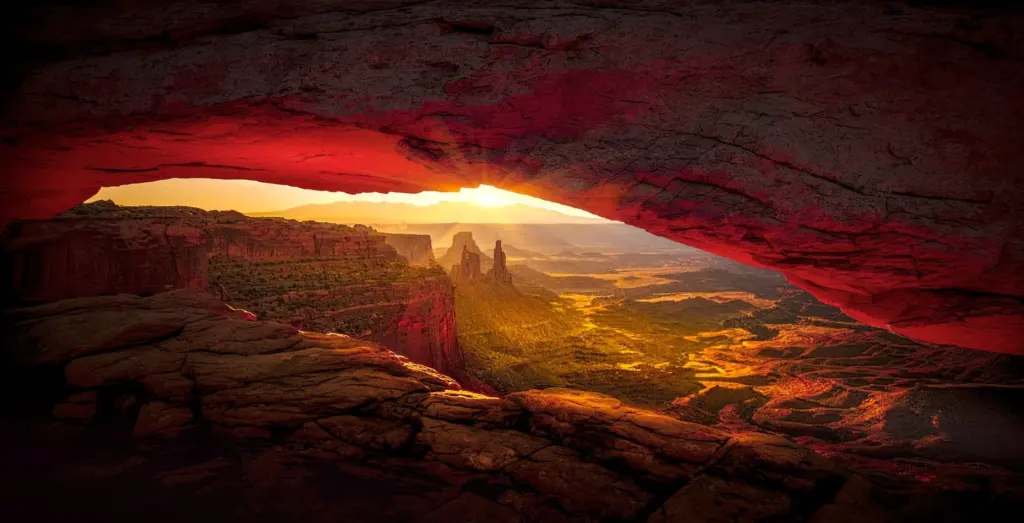
Canyonlands is a separate trip rather than a quick detour. The drive from Moab to the Island in the Sky district takes 30 to 40 minutes, one itinerary site notes. The same site describes Mesa Arch as a 0.5-mile loop that takes 25 to 30 minutes in total. That makes Mesa Arch the easiest high-reward stop, and the Syncline Loop the opposite, a full day with most of your water gone.
Mountain biking and hiking: slickrock is not for everyone
The Slickrock Trail put Moab on the map in 1969 and, in the visitor bureau’s words, it still humbles people. Its fame makes it a tempting first ride, but it is not the best starting point for every rider. Use these rules to choose:
- First-time or relaxed riders: Klondike Bluffs and Bar M are flowy and forgiving, so they build confidence before anything harder.
- Experienced technical riders: Captain Ahab and the Whole Enchilada are the demanding end of the range and are not forgiving.
- Hikers who want scenery without a long day: Park Avenue and Mesa Arch give a large payoff for little effort.
- Hikers who want a full day: Fisher Towers and the Syncline Loop each take most of a day and most of your water, so pack accordingly.
River days: the Colorado is not only whitewater
The Colorado River runs right past town, and the water above town is calm enough for a paddleboard and an afternoon. For whitewater, the Moab Daily is a half day of splashy, family-friendly rapids, so you do not need a multi-day expedition to get on the river. Most trips run spring through fall, and outfitters handle the gear, the shuttle and the permits. Costs vary by outfitter and trip length, so compare current prices from licensed operators before booking.
If you would rather stay dry, Highway 128 follows the Colorado River through red rock canyon for miles and miles, which makes it a good low-effort scenic drive. All of this comes from the Moab visitor bureau.
Off-roading: you do not need a built rig
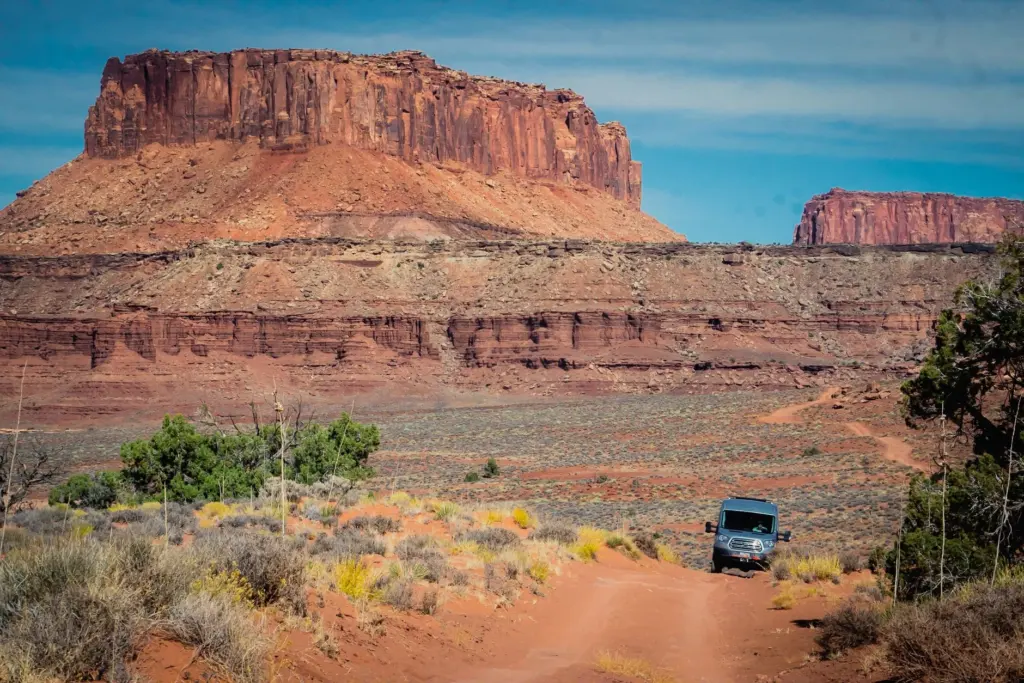
Many first-time visitors assume Moab’s backcountry routes demand a heavily modified vehicle. According to the visitor bureau, Gemini Bridges and Long Canyon are doable in a stock high-clearance rig, while Hell’s Revenge and Fins & Things are steep. The practical rule is to drive your own vehicle only on the easier routes and book a tour for the harder ones. Outfitters run guided tours in open-air side-by-sides and big safari rigs, so you can reach steep terrain without owning the vehicle or the experience.
Best time to visit Moab: season and crowds
Spring (March to early May) and fall (September to October) are the preferred seasons, according to one trip planner. Crowds complicate that: a family travel blog warns that spring break in early April can be very crowded and names March and November as probably the best months. Use these season notes to decide:
- Spring and fall: The best balance of comfort for hiking, biking and parks, but avoid early April if you dislike crowds.
- Summer: Popular and crowded, a summer guide says. Keep strenuous hikes for the cooler end of the day, or spend the heat on the river.
- Winter: Average highs are about 44 degrees in December and January, and nights can reach single digits. This is a good fit for visitors who want short walks and lighter crowds, but not for river trips, which mostly run spring through fall.
How many days you need in Moab
Two days is enough for the two parks, one itinerary site suggests: one day in Canyonlands and the other in Arches. Add a day if you want a river trip, a bike ride or a guided off-road tour, since those take a half day to a full day each. A sensible two-day plan looks like this:
- First day, Canyonlands: Drive to Island in the Sky, walk the Mesa Arch loop, and keep the rest of the day for the overlooks. Choose the Syncline Loop only if you want a whole day of hiking.
- Second day, Arches: Walk Park Avenue for an easy introduction, then take on the Delicate Arch hike if you have the energy.
- Extra day: Choose a Moab Daily half-day raft trip, a forgiving bike trail such as Klondike Bluffs, or a guided side-by-side tour.
Beyond Moab
If Moab’s desert has you thinking about colder, bigger country, alaska adventure travel is a natural next comparison. For a slower, walking-focused trip, see Camino De Santiago Routes: How To Choose The Best Path For Your Pilgrimage In 2026.
Frequently asked questions
| Question | Answer |
|---|---|
| Do I need a timed entry permit for Arches? | It depends on the date, because entry rules, hours and seasons shift, as the Moab visitor bureau notes. Check the official park requirements before you drive. |
| Is Moab good for stargazing? | Yes. Arches and Canyonlands are International Dark Sky Parks, and Moab itself is a certified Dark Sky Community, according to the visitor bureau. |
| Is Dead Horse Point worth adding? | Yes if you like views. The vista there is one of the most photographed scenic vistas in the world, per the visitor bureau, and it is about half an hour from downtown Moab. |