Got one week and want the whole loop? Yes: this Iceland Ring Road itinerary fits in 7 days as a paced overview, provided you check road conditions daily and leave side trips for another visit.
Visit Iceland’s own guide to the Ring Road gives at least 7 days as the travel time, and that is the baseline for the plan below. The assumptions that trip people up come first, then the route stage by stage. For other trips to compare, see our guide to the best adventure travel destinations.
A week on the loop: distance, driving time and minimum days
The Ring Road is a 1,322 km (820 miles) loop connecting most towns and villages. Rick Steves suggests about 30 hours of driving at a reasonable pace, so the loop is a real commitment even before you stop for a single waterfall.
Opinions on the minimum length differ. One travel blogger, writing at Dangerous Business, thinks 7 days is too short and recommends a longer stay. That is a fair verdict if you want long hikes or side valleys. For a traveller who is happy with short walks, photo stops and a few overnight bases, a week works. The trade-off is simple: every extra hike or detour has to be paid for with driving time somewhere else on the loop.
| Common assumption | What is supported | Planning use |
|---|---|---|
| A week is far too short | Visit Iceland lists at least 7 days as the travel time. Rick Steves calls a week a more comfortable minimum. | Treat the week as the floor, not a target to squeeze further, and do not add other stops to it. |
| The Ring Road is only a summer drive | Visit Iceland gives the best travel time as year-round, but says outside the summer season the drive requires close monitoring of road conditions. | Winter is possible if your itinerary can be reshuffled day by day. |
| Summer roads never close | Visit Iceland says mountain routes are prone to closures during storms or high winds, sometimes even during the summer. | Keep some slack in the week even in the easiest season. |
The table draws on Visit Iceland’s Ring Road guide and Rick Steves’ Iceland Ring Road article.
Seasons and road conditions
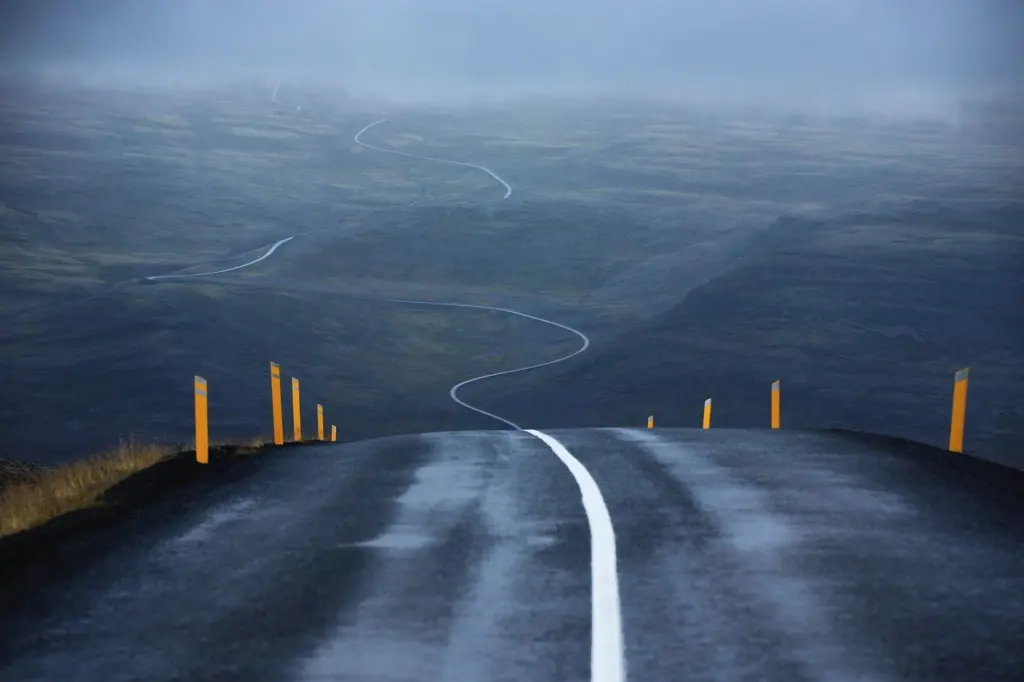
The best time to go depends on how much flexibility you have, because the road is usable all year but not equally predictable. Visit Iceland points to SafeTravel, which provides an up-to-date map with information on road closures, snow and wind conditions, and that map should be the first thing you open each morning.
- September to May: Visit Iceland advises paying close attention to road conditions, because high mountain passes are prone to closure.
- Storm days: the Dangerous Business blog reports that winter storms often close roads, including the Ring Road, completely for a day or two at a time. A fixed 7-day schedule has little room to absorb that.
- May to September: the same blogger names this window as the best time for a road trip in Iceland, which fits a tight plan that cannot afford lost days.
- Mid-June to mid-September: Rick Steves marks this as peak season, when booking ahead matters most.
For a first-time driver with exactly one week, the sensible choice is the May to September window. Winter suits travellers who can move stops around freely and are comfortable checking conditions several times a day.
Vehicle, F-roads and costs
Renting a car is, in Visit Iceland’s words, the easiest and most flexible way to explore the Ring Road at your own pace. The main cost decision is how capable a car to hire.
- You do not need a 4×4 for the loop itself. Visit Iceland answers “4X4 required? No”, and Rick Steves says that unless you want to trailblaze across the interior Highlands, don’t splurge on four-wheel drive. Saving that upgrade is the clearest cost lever for a Ring Road week.
- F-roads are a separate trip. The Better Beyond guide notes a 4×4 is mandatory on F-roads, and that they are only open during the summer months. A loop this length leaves no time for them, so leave them out.
- Accommodation is the other pressure point. Visit Iceland says finding a room between Selfoss and Höfn in peak summer is often challenging, so book well in advance.
A paced 7-day route, stage by stage
Rick Steves advises breaking up the drive with overnights spaced about five hours apart. Use that as a ceiling for any single transfer day, and let the stops below set where you sleep. Day lengths here are a pacing judgement, not fixed distances.
Reykjavík to the south coast
Start in Reykjavík and head along the south coast, where the stretch from Selfoss to Höfn is the hardest to book in peak summer. Reserve these nights first. Stop for waterfalls and viewpoints in the morning, and arrive at your lodging early enough to keep a buffer if conditions slow you down.
Glacier country around Vatnajökull
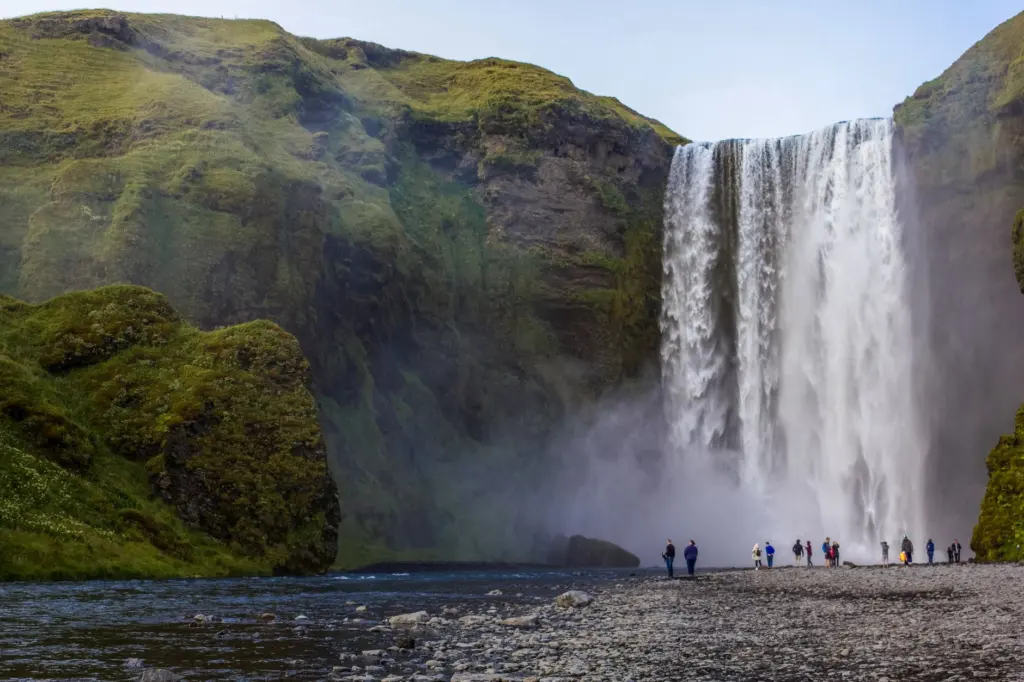
The south route passes Vatnajökull National Park and Jökulsárlón Glacier Lagoon. This is the section most worth slowing down for, because it is the part of the loop that most visitors name as the highlight. If you want a glacier walk or a longer lagoon visit, give this area a full afternoon and shorten the stops that come before it.
The East Fjords and the Öxi shortcut
Rick Steves describes the Eastfjords as majestic but the most tedious part of the Ring Road drive. That makes the East Fjords the place to economise on a 7-day schedule. Visit Iceland lists the Öxi pass as a scenic gravel shortcut that saves 68 km between Djúpivogur and Egilsstaðir. It is best treated as a summer option; in less settled weather, the standard route is the safer choice.
Akureyri and Mývatn
Akureyri is the largest town along the Ring Road, and Rick Steves puts it at about 18,000 residents, so it works as a base with plenty of services. From Akureyri, Rick Steves puts the drive to Mývatn at about 1.5 hours, with a stop at the Goðafoss falls midway. He also calls Mývatn the Ring Road stop most deserving of a second night. If you want that second night, take the time from the East Fjords by using the Öxi shortcut in summer.
The return leg
Use the last stretch of the loop as your weather buffer rather than filling it with detours. Visit Iceland notes that mountain routes can close during storms or high winds, sometimes even in summer, so a free final day lets you absorb a delay without missing a flight home.
Other road trips to compare
If a motorbike loop appeals more than a rental car, the Ha Giang Loop Map: The Complete 2026 Route Planner For Scenic Motorbike Adventures covers a very different kind of route. For a short city stay rather than a road trip, try Cusco In 48 Hours: Top Things To Do For First-Time Visitors (2026).
Frequently asked questions
| Question | Answer |
|---|---|
| How long is the drive without any stops? | The Better Beyond guide says a seven-night itinerary covers approximately 1,350 km, about 20 hours of driving without stops, so photo stops and walks add substantially to that figure. See Better Beyond. |
| What is the usual speed limit on gravel roads? | Typically 80 km/h on gravel roads, according to Better Beyond. |
| Can the loop be done in fewer than 7 days? | Rick Steves outlines a speedy-but-satisfying six-day, five-night express plan, but warns that attempting the Ring Road in fewer than five days will be regrettable in retrospect. |