| Dish or situation | What to know | Planning use |
|---|---|---|
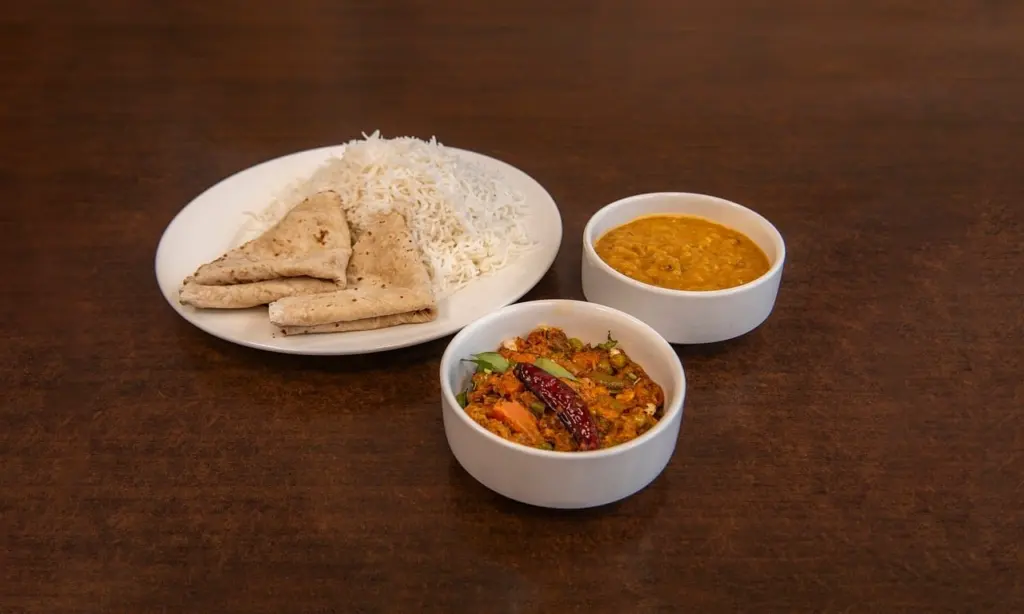
| Dal bhat | Rice, a thick lentil soup (dal), curried vegetables (tarkari) and vinegar-pickled vegetables (achaar); usually vegetarian because meat is very expensive in Nepal | Order it as the default full meal, and expect no meat unless you ask for it |
| Momo | Small stuffed, steamed dumplings that originally hail from Tibet and are now served everywhere in Nepal | Works as a snack stop or a lighter meal in towns |
| Thukpa | Noodle soup that can help you beat cold weather while trekking at high altitude | Choose it for cold stops, when you want something warm and filling |
| Thakali set | Mostly eaten at lunch or dinner | Plan it as a midday or evening meal rather than a quick breakfast |
| Dhido | Made from millet, wheat, maize or buckwheat flour; replaces dal bhat in parts of Nepal | Expect it instead of rice where those grains are the local staple |
| Home mealtimes | Households usually eat dal bhat around 10am and a second around 5pm | Useful timing context if you are invited to eat with a family |
Dish descriptions and eating patterns in this table come from a Nepalese dishes overview and a Nepal food guide.
The top 10 Nepali food list opens with dal bhat, momo and thukpa: an everyday meal, a dumpling served across Nepal and a warming soup. Festival plates, fermented sides and sweets follow.
If you are planning food stops as part of a wider route, the adventure travel food and culture guide puts these dishes in context with eating on the move elsewhere.
Ordering decisions for trekkers and city visitors
The most useful way to approach Nepali food is to decide what each meal needs to do: fill you up, warm you up, or let you taste something local. These choices follow from how the dishes are built.
- Learn dal bhat first. It is the main component of Nepali meals, and rice and lentil soup are usually joined by vegetables such as potatoes or greens. If you order nothing else well, order this.
- Reach for thukpa when the weather turns. It is a noodle soup with vegetables and meat such as chicken, beef or pork, and it is described as a unique food in the Himalayas. It suits a cold afternoon better than a light snack does.
- Treat momo as a flexible stop. People eat them as a snack or sometimes as a whole meal, so you can size the order to your appetite. Try momo at least once before you leave Nepal.
- Expect the grain to change with altitude. In mountain areas the staple is mainly corn, millet and buckwheat rather than rice, and dhido is eaten heavily around hilly areas. A menu without rice is normal there, not a shortage.
- Look for a Thakali set at lunch or dinner. It brings rice, black lentils, gundruk, ghee, pickles and curry together in one meal.
- Say yes to gundruk. It is a side dish that goes well with curries and dal bhat, so it adds sourness to a plate without needing a separate order.
The ranked dishes
This ranking puts everyday dishes and widely served snacks first, and festival plates and sweets last. It follows how widely each dish is eaten and how easily a visitor can fit it into a day.
Everyday meals: dal bhat, Thakali set and dhido
First, dal bhat. A typical plate holds rice (bhat), a thick lentil soup (dal), a vegetable curry (tarkari) and achaar, the vinegar-pickled vegetables that add sharpness. Because meat is not in every meal, a plate without it is the ordinary version. When meat does appear, it is usually chicken or goat.
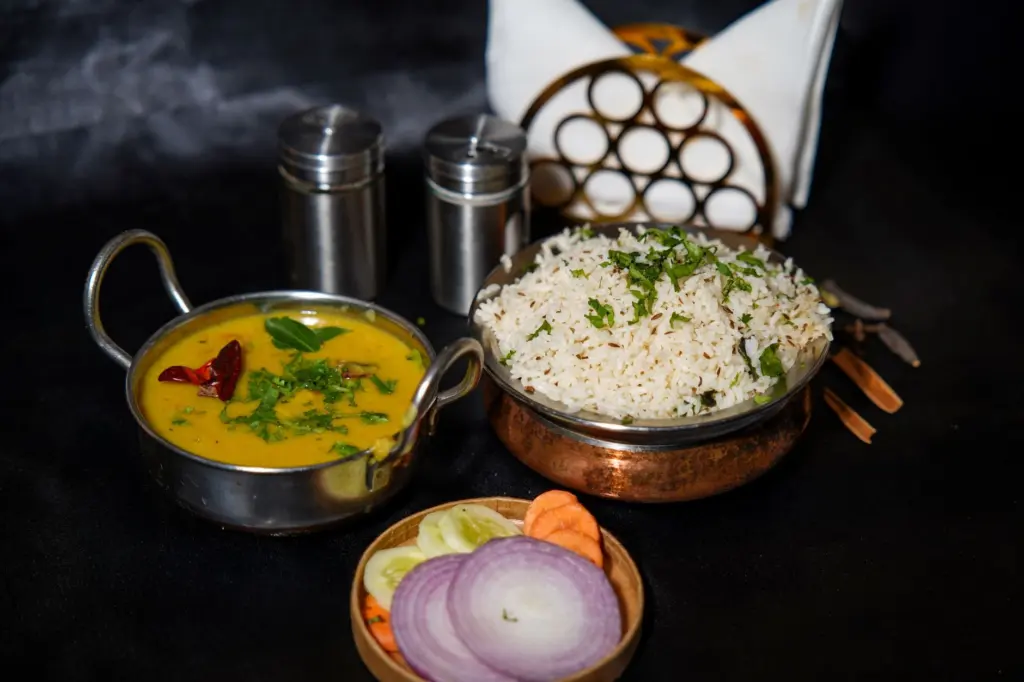
Fourth, the Thakali set. The set combines rice, black lentils, gundruk, ghee, pickles and curry. Rich ghee and tangy pickles make it more of a composed meal than a plain dal bhat, so it suits a longer sit-down lunch or dinner.
Sixth, dhido. Dhido can be made from millet, wheat, maize or buckwheat flour, and it replaces dal bhat in parts of Nepal. Where rice is not the local grain, this is the dish that fills the same role beside curries and gundruk.
Snacks and soups: momo and thukpa
Second, momo. These dumplings originated in Tibet and are now served everywhere in Nepal. The filling can be vegetables or meat such as chicken, pork or lamb, and some versions use cheese or milk tofu. Momo can be steamed, or half-steamed and half-fried, and they usually come with a tomato and sesame sauce. If you eat meat, ordering a mix of fillings is the simplest way to compare. Vegetarians have a clear option in the vegetable version.
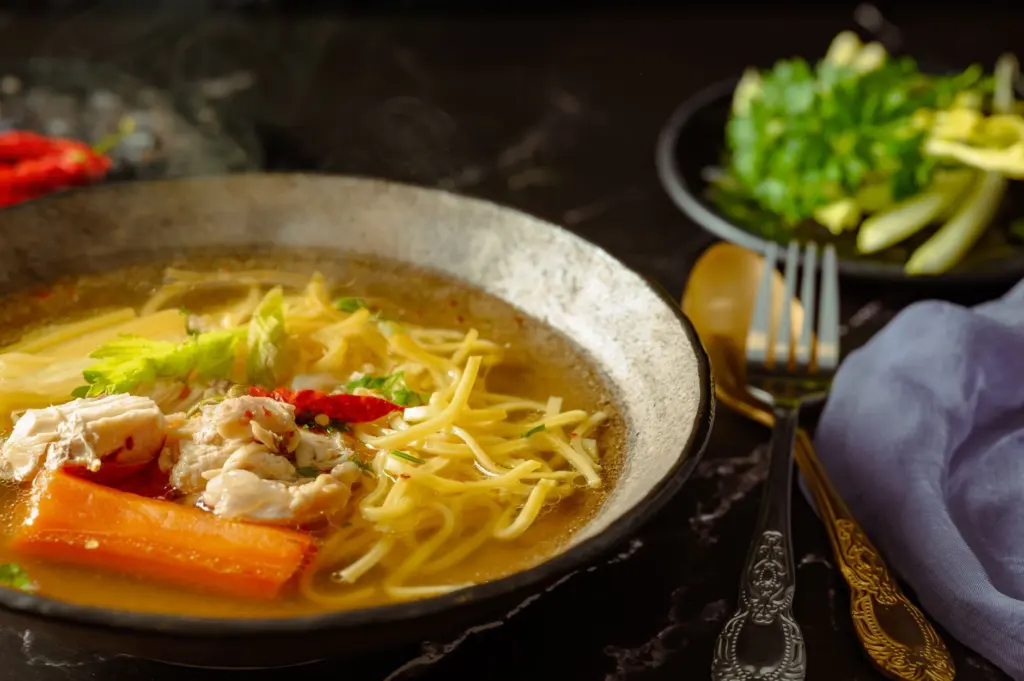
Third, thukpa. Thukpa is a noodle soup that also originated in Tibet. A bowl is a full meal, built from noodles, vegetables and a choice of meat, and the hot broth is why it is recommended for high-altitude cold.
Valley festive food and sweets
Fifth, the Newari khaja set. The Newari khaja set is the clearest example of festive eating. It is served at Newari family gatherings and festivals, and a set can comprise over 10 dishes on a plate. One version, the Samay Baji, includes chiura (mashed rice), choila (spicy meat in marinade), bara (lentil pancakes), black-eyed peas, boiled eggs and kimchi, according to a Nepal food guide. Other descriptions list alu tama, egg bara, gundruk, juju dhau and chatamari. Because the plate is so varied, it suits a group meal or a deliberately slow tasting better than a quick refuel.
Seventh, gundruk. Gundruk is made by fermenting green leafy vegetables such as mustard leaves, cauliflower and radish leaves, according to a Nepal travel food guide. It is a complementary side rather than a main, and it appears in the Thakali set and the Newari khaja set. Treat it as the tangy element on a plate.
Eighth, sel roti. Sel roti is made of rice flour, salt and sugar, deep-fried in a ring shape. It is a sweet, fried bread, and you can expect a lightly sweet snack rather than a savoury one.
Ninth, yomari. Yomari is a dessert of rice dough stuffed with coconut paste, and it is common in the festival season. Look for it during festivals rather than expecting it year-round.
Tenth, juju dhau. Juju dhau is a sweet yogurt that is a specialty of Bhaktapur. Because it is tied to one town, it is a reason to taste locally rather than a dish to order anywhere.
Eating customs, mealtimes and safety
Nepali food is usually eaten with the hands, without utensils, according to a cultural-exchange guide to Nepali meals. A dal bhat plate suits that style because rice, lentil soup and vegetables can be mixed by hand. If you prefer cutlery, ask for it; the hands-first custom describes the usual way of eating, not a rule you have to follow as a visitor.
Timing also matters if you stay with a family. At home, people usually eat a dal bhat around 10am and a second around 5pm, according to the Nepalese dishes overview. So a household meal may fall outside the lunch and dinner times you expect, and it is worth asking when food will be served.
For food and water safety, check current travel-health guidance from a health agency such as the CDC before you travel, and follow it for the specific places you will visit.
Why Nepali food varies from place to place
Nepal is a multi-ethnic country with different cultures and lifestyles, which is why dishes change with ethnic group and geography. That explains why dhido and corn or millet dominate in the mountains, why momo and thukpa carry a Tibetan origin, and why Newari cuisine is a tradition of its own. The same guide notes that Newari cuisine has almost 200 kinds of dishes, so the khaja set is only one slice of it.
This variety is also why no single dish defines the country. Dal bhat is the common thread, and the sides, grains and snacks change around it.
Comparing with other food-led routes
If you want to see how another culture builds a travel meal around a staple, read Beyond The Steppe: A Practical Guide To Traditional Mongolian Food In 2026 for a very different grassland diet. For a grain-and-stew comparison, Traditional Ethiopian Food: A Flavorful Guide To Injera, Wot, And More (2026) is a natural next read.
Frequently asked questions
What are the most popular Nepali foods?
Dal bhat is the main component of Nepali meals. Momo are popular enough to be eaten as a snack or sometimes as a meal. Thukpa, dhido and the Newari khaja set round out the dishes most visitors meet.
Does dal bhat always include meat?
No. Meat is not in every meal, and because it is expensive in Nepal, dal bhat is usually vegetarian. When meat is served, it is usually chicken or goat.
Which spices define Nepali cooking?
The main spices are masala, turmeric, ginger, chili powder, cloves and cumin. They season the lentils, curries and fillings that appear throughout the dishes above.