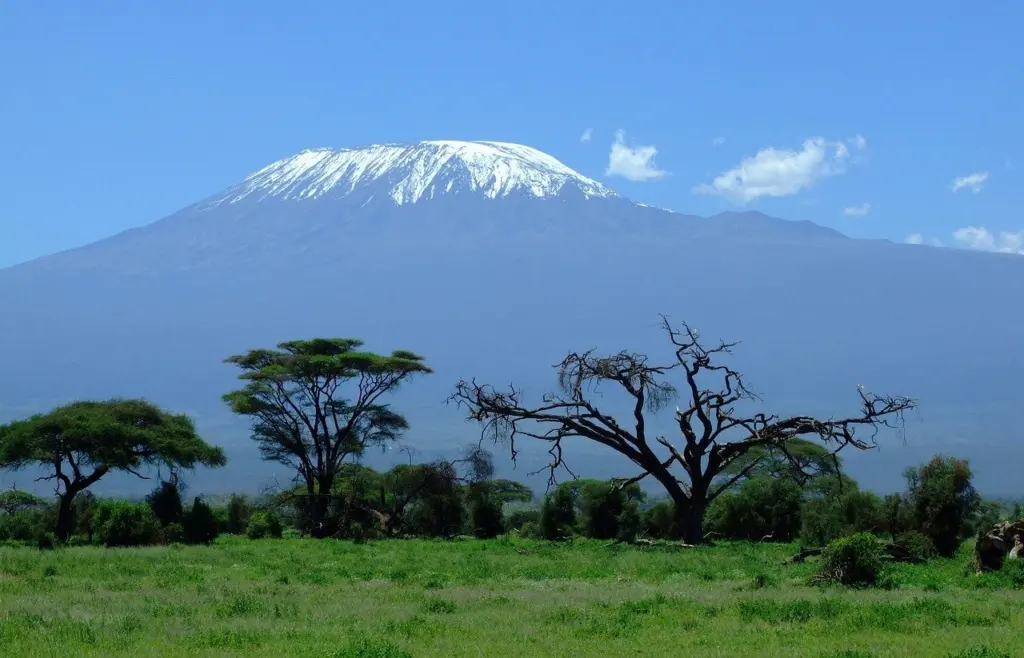
Where is Kilimanjaro located? Mount Kilimanjaro stands in northern Tanzania near the Kenyan border, about 300 km south of the equator, and its summit reaches 5,895 m above sea level.
That position drives most practical decisions: which airport to fly into, which town to sleep in, and how the weather changes on the way up. Kilimanjaro is a fixture among the best adventure travel destinations, and the logistics below apply to any route you choose.
Where Kilimanjaro sits in East Africa
Kilimanjaro is in Tanzania, in the north of the country, close to the Kenyan border. One regional guide places it about 300 km south of the equator, so the mountain belongs to the tropics even though its summit is a cold, high-altitude environment. The border location matters for planning because you enter Tanzania to climb. Tanzania is the country that hosts the mountain and its national park.
Elevation and the summit
The highest point on the continent is 5,895 m above sea level, which makes Kilimanjaro Africa’s highest mountain. The scale of that climb is the reason location and logistics are tied together. You start in warm, populated lowlands and finish above the point where most people feel comfortable without acclimatising. Choose your base town and route with the height gain in mind, not just the transfer distance.
The three cones and where the summit is
Kilimanjaro is a stratovolcano made up of three cones: Mawenzi, Shira and Kibo. When climbers talk about reaching the top, they mean the highest point on Kibo. The summit on the Kibo cone is named Uhuru, which means freedom in Swahili.
This is useful when reading route descriptions or park signage. Uhuru Peak is the goal for standard summit treks, while Mawenzi and Shira are separate cones that form part of the same massif. Knowing that the mountain is one volcanic complex rather than a single cone also explains why different routes can approach it from different sides and still meet the same summit area.
Airports, towns and transfer times
Most climbers fly into Kilimanjaro International Airport (KIA), the closest airport to the mountain. International travellers can use direct flights from Europe or the Middle East, so many itineraries do not need a domestic connection. From the airport, the two bases are Moshi and Arusha.
| Place | Travel time | Planning use |
|---|---|---|
| Kilimanjaro International Airport to Arusha or Moshi | Approximately 45 minutes | Short enough to reach a hotel on the day you land, so you can rest before briefings. |
| Moshi to the mountain | About 1 hour by road | The shorter drive, which suits itineraries that want an easy start on the morning of the climb. |
| Arusha to the mountain | About 1 hour 30 minutes by road | Workable if you are combining Kilimanjaro with other travel from Arusha, but allow for the longer morning transfer. |
Transfer times come from Global Adventure Challenges’ location guide for the airport and from Gorilla Trackers’ Kilimanjaro overview for the two towns.
Choosing between Moshi and Arusha
Pick Moshi if the climb is your only aim and you want the least time on the road before the trek. Pick Arusha if the trip includes other stops in northern Tanzania. Either way, the airport sits close enough to both that a night near the mountain before starting is easy to arrange, which gives you a buffer against delayed flights or late luggage.
Climate zones from base to summit
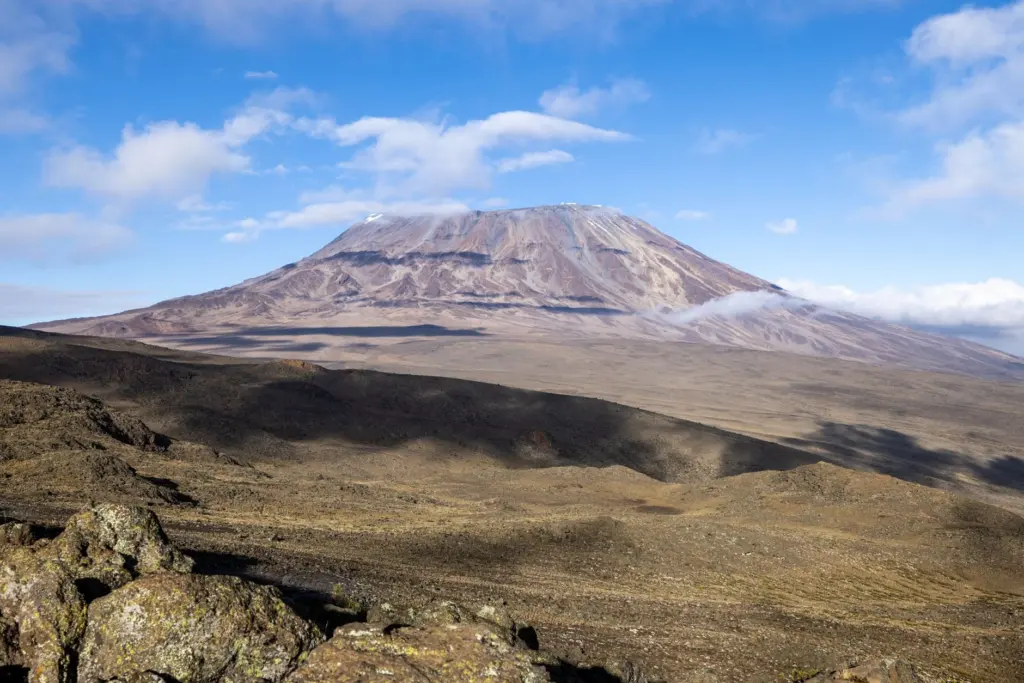
Kilimanjaro’s climate zones are stacked by altitude, so a single trek crosses several environments. The climb generally begins in forest, passes through mountain moorland and finishes in alpine desert. Another regional guide describes the same range as lush rainforest through to alpine desert, depending on altitude.
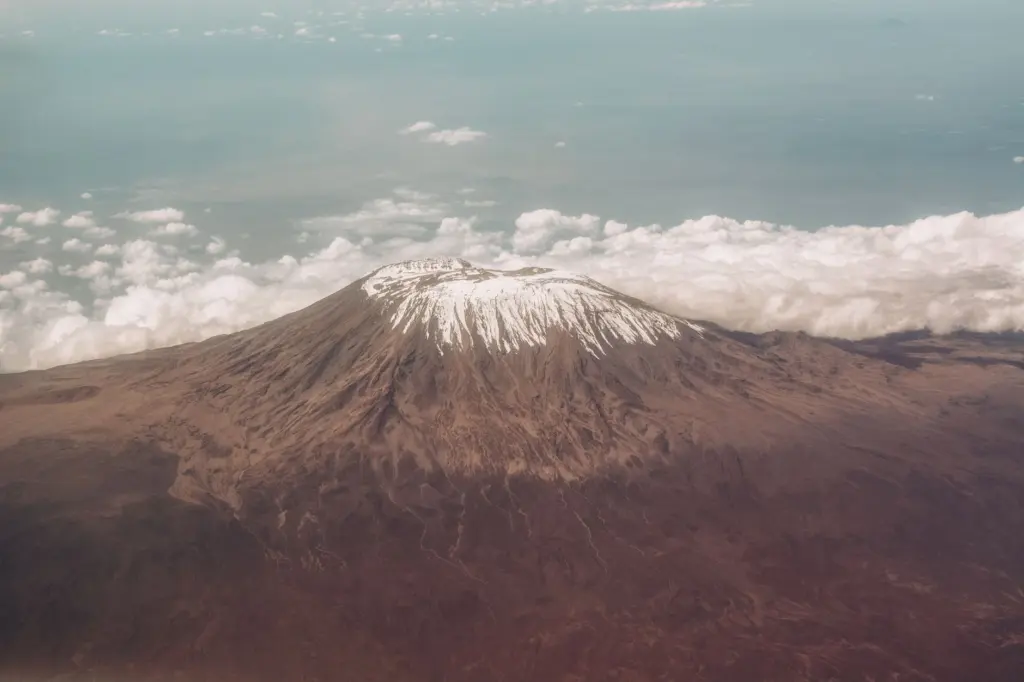
- Forest: the starting environment on the lower slopes, where you walk among trees before the terrain opens up.
- Mountain moorland: the middle band, with more open ground as you gain height.
- Alpine desert: the barren upper zone, where vegetation is sparse and the final push to the summit takes place.
Temperatures and seasons
The temperature gap between the base and the top is large. The average at the base is 21 to 27 °C, while the average at the summit is approximately -7 °C. In practice, that means packing for both warm lowland days and freezing summit conditions, rather than bringing one set of clothes.
The mountain also has distinct wet and dry periods:
- Rainy seasons: March to May and November. Expect more cloud and wetter ground on the lower, forested sections in these months.
- Dry seasons: June to September, the longest, and late December to February. The longest dry stretch is the simplest window to plan around if your dates are flexible.
Dry months do not guarantee a snow-free summit, because snow can fall at any time of year. Treat dry-season dates as a way to improve your odds of settled weather, not as a promise of it.
Park rules and trek planning
Kilimanjaro National Park, which protects the mountain, was gazetted in 1973. You climb inside the park, so your route, fees and support arrangements are set through a registered trekking operator. Confirm current park fees and permit requirements with your operator before booking, since charges are set by the park and can change.
Trek length and pace
Time on the mountain is the most important rule of thumb. Summit treks take from 5 to 9 days depending on the route. As one example, the Machame route takes an average of eight days to complete. Choose a longer itinerary if you want the best chance of adjusting to altitude, because climbing too quickly can cause altitude sickness.
Support and responsibility
Porter support is part of how climbs are run. On the itineraries described by Journeys by Design, each climber is assisted by at least two porters. When comparing operators, ask how many porters support each climber, since that is a concrete figure you can check.
Comparing Kilimanjaro with other big treks
Kilimanjaro suits trekkers who want a single, well-defined summit goal reached from a base town with an international airport close by. If you are weighing it against other high-altitude trips, Cusco In 48 Hours: Top Things To Do For First-Time Visitors (2026) shows how another high-altitude base can be used before a trek, and our comparison of the best treks in nepal covers a very different style of multi-day walking.
Frequently asked questions
What is the nearest mountain to Kilimanjaro?
The closest mountain to Kilimanjaro is Mount Meru.
Can it snow on Kilimanjaro at any time of year?
Yes. Snow can fall at any time of the year, so pack for cold summit conditions even in the dry months.
Is Kilimanjaro’s ice disappearing?
Data suggest it is shrinking. Kilimanjaro has lost around 80% of its ice since 1912.
Should I see a doctor before booking a climb?
Yes, that is the advice given for climbers. Get checked over by a doctor before booking, particularly because the altitude gain is large.