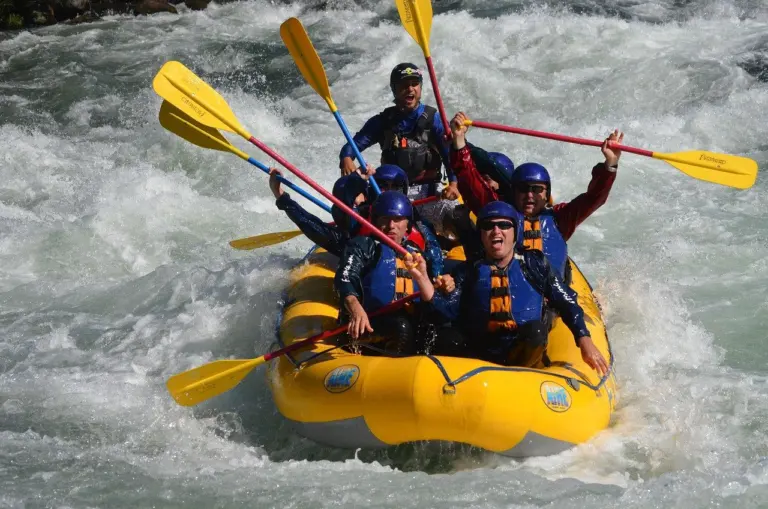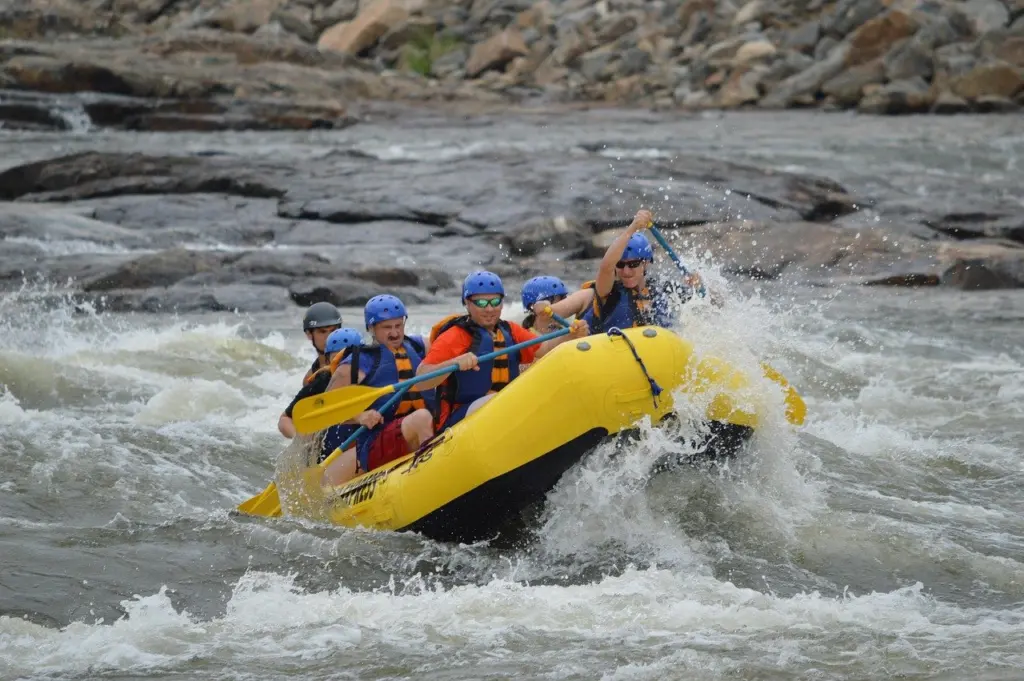
Extreme white water rafting means Class V sections such as Cherry Creek, and the safe route there runs through Class III and IV trips first, with swim tests and experience requirements on the hardest runs.
Rafting is one branch of river travel, and the wider menu of trip styles sits in our guide to types of adventure travel. What follows explains what pushes a river into extreme territory, which rivers define it and how to build up to them without skipping the steps that keep a trip safe.
What makes whitewater extreme
Outfitters reserve the word “extreme” for the top of the difficulty scale: Class V sections and the harder Class IV+ trips. The label usually describes how much hard water a river packs into a short stretch, how steep the riverbed is, and how big a jump the trip is from ordinary guided rafting. It rarely describes a single big drop.
Dense Class V water
The Cherry Creek section of the Tuolumne River contains 15 technical Class V rapids in under 9 miles, according to an outfitter’s overview of US extreme runs. NW Rafting calls Cherry Creek the gold standard for Class V and the hardest section of commercially rafted whitewater in the US. For a rafter, density is the point: rapids arrive in quick succession, so the run asks for sustained paddling and focus rather than a few dramatic moments between long, easy stretches.
Steep gradient
Steepness can make a river feel extreme before its class label does. River Runners describes the Kaweah as the steepest river in the Sierra Nevada mountains, offering Class IV+ thrills. Steep Class IV+ runs therefore belong in the same conversation as Class V, and they are the realistic bridge toward it for most people.
The step up from Class III
River Runners puts the jump plainly: whitewater rafting is exciting even at Class III, so stepping up to Class IV+ is something else. Treat that step as a change of category, not a routine upgrade. The rest of this article follows the same logic: each stage adds difficulty, and the rivers at the top screen for the stages below them.
Top extreme rivers and when to run them
Season and flow decide what a river is like on the day. Dam-controlled rivers give a predictable window, while snowmelt-fed rivers offer a shorter or less certain one. The table compares a spread of well-known runs, from tightly packed US Class V sections to a big-water gorge that can be rafted for much of the year.
| River or section | What defines it | Season or flow window | Planning use |
|---|---|---|---|
| Cherry Creek (Tuolumne River) | 15 technical Class V rapids in under 9 miles | May to October | The benchmark Class V day; plan it as a goal after Class IV experience |
| Upper Gauley | Class V section known as the Beast of the East; flows consistent thanks to dam releases | May to October; flows range from 400 to 5,000 cfs | Easiest of the Class V runs here to schedule well in advance |
| Gore Canyon | Class IV and V rapids after 4 miles of flatwater before 5 miles of whitewater | May to October | Suits fit rafters who already have whitewater experience |
| Upper Animas | Class III, IV and V waves; swim test required | May to July | Shortest window of the US runs here, so fix dates early |
| Zambezi (Bakota Gorge) | 25 big-water Class IV and V rapids in a deep gorge | Rafted most of the year | Most flexible calendar for travellers who cannot hit a US summer window |
| Lochsa | 30 big rapids in 30 miles | Boatable from 1,500 cfs to over 22,000 cfs | Ask which flow level is running, because the character shifts across that range |
Figures for the US sections come from an outfitter’s US extreme rafting overview, and the Zambezi and Lochsa details come from NW Rafting’s list of legendary trips.
Reading flow and season
The Upper Gauley’s flows are fairly consistent because of dam releases, which makes it the easier Class V to build a trip around. The Lochsa shows the opposite problem: a boatable range from 1,500 cfs to over 22,000 cfs means two visitors can meet very different rivers. In California, River Runners says the best time to raft Class IV rivers is spring, when snowmelt runs high. When you compare operators, ask what flow they expect on your dates, not just whether the river is open.
US classics and a Colorado starting point
Cherry Creek and the Upper Gauley share a May to October commercial season, so late-season trips are possible on both. Gore Canyon pairs Class IV and V rapids with a flatwater approach before the whitewater starts. The Upper Animas ends in July, so plan around that shorter May to July window. If you are weighing lower-grade trips in the Rockies first, White Water Rafting In Colorado: Best Rivers, Safety Tips, And Planning Your 2026 Adventure compares rivers by difficulty and planning needs.
The Zambezi
NW Rafting describes the Zambezi’s Bakota Gorge as 25 big-water Class IV and V rapids in a deep gorge that can be rafted most of the year. That long season is its practical advantage: you can choose travel dates for your own calendar and budget rather than around one short runoff window.
Futaleufú and the Grand Canyon
NW Rafting compares the Futaleufú’s bridge-to-bridge section with running the biggest Grand Canyon rapids back-to-back in just 5 miles. That comparison is the clearest way to understand the river: the Grand Canyon is a famous big-water trip, and the Futaleufú compresses its largest rapids into a short stretch. It is a run for rafters who have already handled sustained Class IV water.
A safe progression path from beginner trips
Safe progression works because every stage tests something the next one needs. Outfitters on the hardest rivers gate entry with swim tests and experience requirements, so a sensible plan builds the skills before you arrive at the gate.
- Book a Class III trip first. River Runners recommends that anyone considering a Class IV trip have at least one Class III trip under their belt. Use it to learn how a raft crew works together and how you feel when the water gets loud.
- Step up to Class IV or IV+. River Runners says experience is not required to join a Class IV trip, but it still recommends that prior Class III trip. Treat the recommendation as the norm. Repeat Class IV until the water feels manageable rather than just survivable.
- Treat the swim test as a gate. Cherry Creek’s swim test is through a Class IV rapid, and the Upper Animas requires a swim test for eligibility. If swimming a Class IV rapid sounds unwelcome, Class V is not your next step.
- Move to Class V with the prerequisites in hand. The US outfitter overview warns that some sections are not recommended for people who have no rafting experience or do not meet the physical requirements. Choose a run whose requirements you meet comfortably rather than barely.
Kit for each step
Clothing and equipment choices change with the river and the trip, and they have their own guide in What To Wear White Water Rafting: Essential Clothing And Gear For A Safe, Comfortable Trip In 2026. Sort that out before you commit to a Class IV or Class V date.
Choosing a guide company
The best guide company for extreme water is the one that asks the most of you before the trip. Operators on the hardest rivers state their prerequisites and enforce them, which is what the swim tests and experience requirements above show. A company that will put anyone on a Class V section without questions is not matching the standard the leading outfitters set.
- Published prerequisites. Look for clear statements about experience, fitness and swim ability for the exact run you want, not a generic waiver.
- Screening in practice. A swim test or an experience conversation before the trip is a good sign. Gore Canyon’s operator requires participants to be athletic and to have previous whitewater rafting experience.
- Honest flow and season advice. Ask what flow level to expect on your dates and whether a different week would suit your skill level better.
- A matching run. Pick a trip that fits your current stage, not the one you hope to reach. Your next run should be one step up, not three.
- Safety questions to ask. Ask how guides are trained, what the rescue plan is for a swimmer, how many guests each guide handles and how emergencies and evacuations are managed. A confident operator answers these directly.
Frequently asked questions
Can you raft more Class V beyond the Futaleufú bridge-to-bridge section?
Yes. NW Rafting says you can go past the take-out bridge to add Mas-o-Menos (V-) and Casa de Piedra (V), which extends the run for rafters who want more.
What do outfitters require for Gore Canyon?
Participants are required to be athletic and to hold previous experience with whitewater rafting. Gore Canyon combines Class IV and V rapids, with flatwater approaching the whitewater.
Which extreme river suits a trip outside the US summer season?
The Zambezi’s gorge section can be rafted most of the year, which makes it the best fit for travel outside the May to October window of Cherry Creek, the Upper Gauley and Gore Canyon.