| Jump feature | What it involves | Planning use |
|---|---|---|
| Ankle dive | Two independent ankle harnesses linked to a waist harness, with the cords attached at the ankles. Described as the classic bungee jump seen on television. | Choose it if the television-style jump is what you want. Ask the operator to show you the ankle harness before you commit. |
| Full-body harness | Two independent harnesses, a seat harness and a chest harness, with the cords attached at the stomach. | Choose it if you would rather not be attached by the ankles. |
| Bridge pendulum system | A fixed cord anchored to the bridge structure, with the jumper attached by harness and a pendulum swing after the leap. | Expect a swing after the leap, not only a vertical fall. Pick a bridge site if the setting is part of the appeal. |
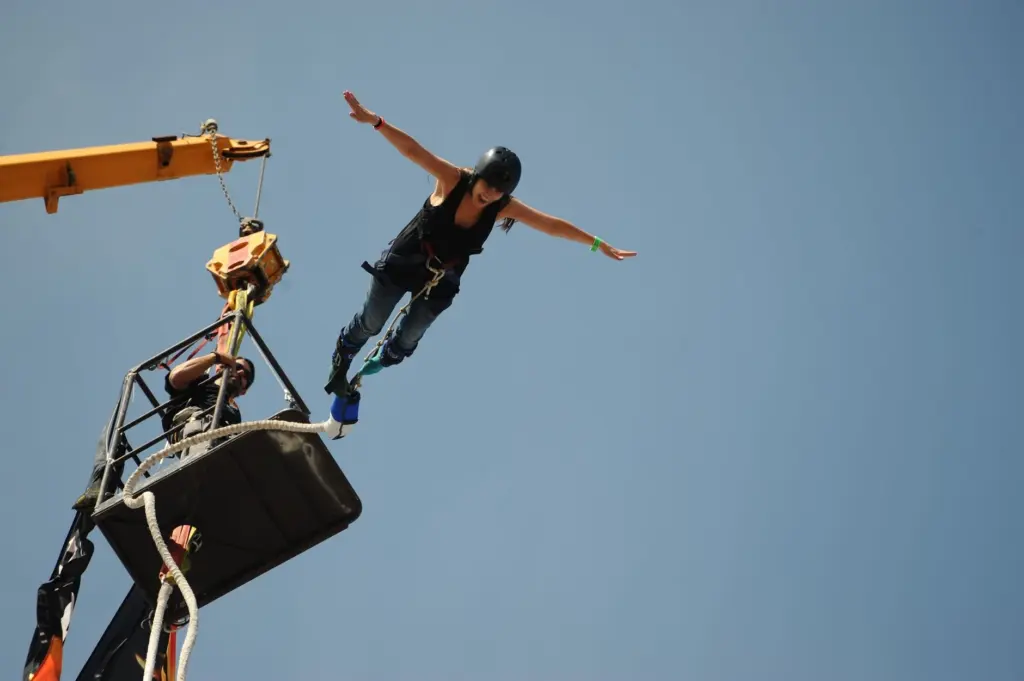
| Crane jump | An elastic cord attached to the ankles instead of the waist. | Consider it when no bridge or gorge is within reach. Confirm the attachment point when you book. |
| Operator packages | One operator combines 6 different types of bungee jump into 5 jump packages, with 2 harness types. | Compare what each package includes before you compare prices. |
These details come from Bungee America’s jump styles page and Yumping’s guide to bungee jump types.
What is bungee jumping? It is a freefall jump from a bridge while attached to a long elastic cord. The harness you wear and the operator’s instructions shape both how the jump feels and how much risk you carry.
Bungee jumping sits near the high-adrenaline end of the types of adventure travel. It asks very little fitness of you but a lot of trust in the people and equipment around you. Most of the decisions that matter are made before you reach the platform.
Harness choice and what it changes
The harness decides where the force of the cord acts on your body and how you are positioned when you leave the platform. That makes it the first practical choice, ahead of the site or the price.
An operator’s jump styles page describes two broad setups. In the full-body setup, each jumper wears two independent harnesses, a seat harness and a chest harness. The cords attach at the stomach. In the ankle setup, two independent ankle harnesses are linked to a waist harness, and the cords attach at the ankles. The ankle dive is the one the operator calls the classic bungee jump seen on television.
Use the attachment point as your decision rule:
- Pick the ankle dive if you want the version people picture when they hear the words “bungee jump”. It is the setup most closely tied to the sport’s image.
- Pick a stomach-attached full-body harness if the idea of the cord pulling on your ankles puts you off. Ask the operator what the exit looks like before you book, because the setup affects how you step off.
- Ask for the harness details in advance if you are unsure. A reputable operator will explain each setup and show you the equipment before you sign anything.
Two independent harnesses per jumper is the arrangement this operator describes, in both the full-body and the ankle setup. If an operator cannot explain how its harness system is built, treat that as a reason to look elsewhere.
Bridge, crane and pendulum formats
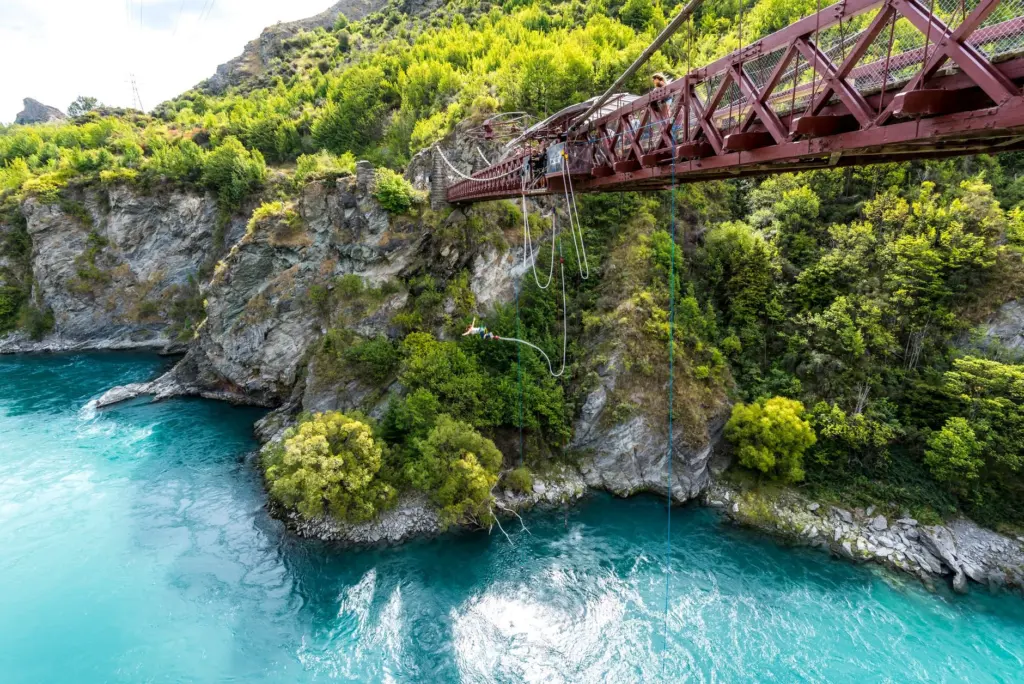
The anchor point defines the format of the jump. On a bridge, the fixed cord is anchored to the bridge structure and you are clipped in by harness. According to Yumping’s overview of bungee jump types, a pendulum swing follows the leap in this system. In a crane jump, the cord is attached to the ankles instead of the waist, and the platform is lifted by a crane rather than fixed to a bridge.
These formats suit different trips:
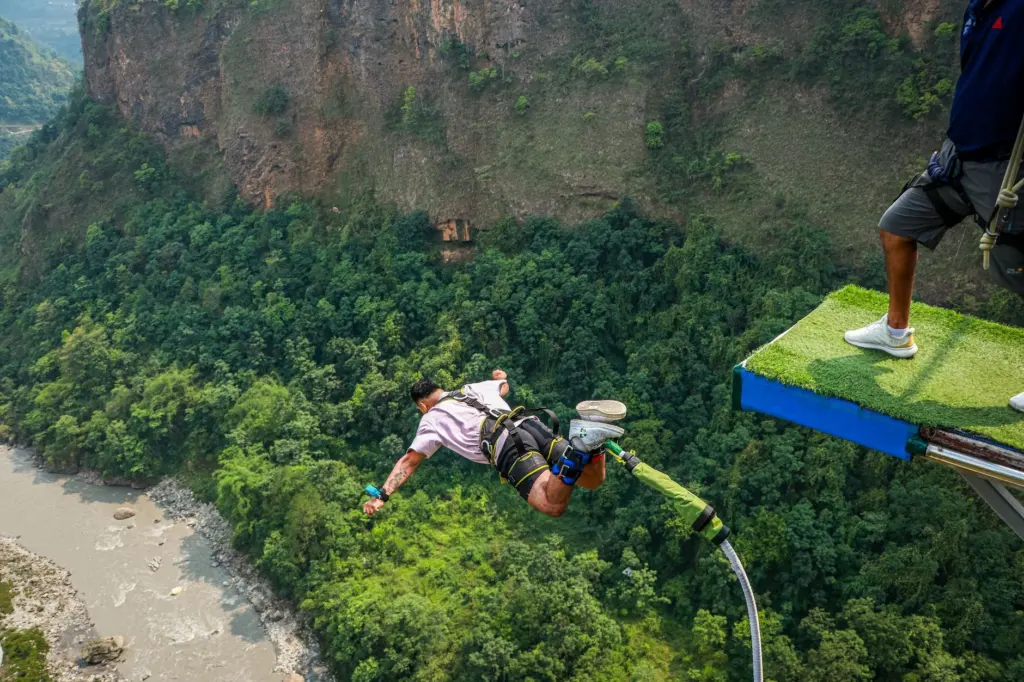
- Bridge jumps suit travellers who want the setting to be part of the experience. A gorge or river below changes what you see, though not the basic mechanics.
- Crane jumps suit anyone who cannot get to a suitable bridge, because the operator brings the height with them. The cord attaches at the ankles, so check this suits you before booking.
- Pendulum-style bridge systems add a sideways swing after the leap. If you prefer a purely vertical fall, ask the operator which system a site uses.
Safety and operator checks
Bungee jumping is described as one of the lowest-risk extreme sports, with insurers cited as the basis. That description comes from Yumping and comes without injury statistics. Read it as reassurance about the sport’s general profile. It does not promise safety at any particular site.
The same guide names the most crucial safety measure as jumping as the guide instructs, with extra attention on the first leap. That puts a lot of weight on the person who briefs you, so judge the operator by how it handles the briefing as well as by how it presents its equipment.
Use these checkpoints to decide whether to go ahead:
- The briefing is clear. You should understand what the guide wants you to do at the edge and when. If the instructions are rushed or vague, step back and ask again.
- Equipment is shown, not hidden. You should be able to see the harness and the way the cord attaches. An operator proud of its setup will not mind explaining it.
- Health questions are asked. Tell the staff about any medical condition, injury or medication, and check with your doctor beforehand if you have a condition that worries you. Ask what weight and health limits the operator applies, because they differ between sites.
- You can say no. The decision to jump is yours until you leave the platform. A site that pressures you to hurry is not one to trust.
Treat the operator’s own paperwork the same way. Read any waiver before you sign it, and check whether your travel insurance covers adventure activities before you pay a deposit.
Choosing a site and operator
A site should be chosen by the operator first and the view second. Famous gorges and high bridges are an easy way to build a trip around a jump, but the quality of the staff and equipment is the thing you are paying for.
Bungee America’s page shows what a clear offering looks like: 6 different types of jump combined into 5 packages, with 2 harness types. The useful lesson is that you should compare what a package includes, rather than just its headline price. Packages with different jump styles are not equivalent products, even when they cost the same.
Before booking, ask each candidate operator these questions:
- Which jump style is included? Ankle dive, full-body harness and pendulum systems feel different, so make sure you are booking the one you want.
- What does the price cover? Find out whether the briefing, harness hire and any extras are included.
- Who will brief you? You will be following that person’s instructions at the edge.
Prices vary by site and package. Collect a few written quotes for the same jump style and compare like for like.
Where bungee jumping came from
Bungee jumping was invented in France in the 1970s by a German climber, according to the Yumping guide. A climbing origin helps explain why harnesses and anchoring remain central to the sport. The attention a jump gets from operators today reflects that heritage.
Preparing for jump day
Preparation is mostly about attention rather than fitness. Arrive in time to listen to the briefing without hurrying. Wear what the operator advises, and remove anything that could catch on a harness if staff ask you to.
Plan the rest of your day around the jump, not the other way round. If nerves are high, say so to the guide. They will tell you what to do at the edge, and following those instructions is the single most important thing you can do.
Thrill-seekers who enjoy this kind of exposure often like other harness-based activities. Via Ferrata Explained: What It Means, How It Works, and How To Try One Safely covers a cable-protected climbing route, and Ocoee Whitewater Rafting: How To Plan An Unforgettable Trip On Tennessee’s Legendary River suits those who want their adrenaline on the water.
Frequently asked questions
Is bungee jumping safe?
It depends on the operator and on you. The sport has a reputation as low-risk, but no sport is risk-free. Choose an operator that explains its equipment, tell staff about health conditions, and do exactly what the guide says.
Do all bungee jumps attach the cord at the ankles?
No. Ankle dives and crane jumps attach at the ankles, while a full-body harness setup attaches the cords at the stomach.
What is the classic style of bungee jump?
The ankle dive is the style people know from television. Operators also offer other styles built around different harness types.